
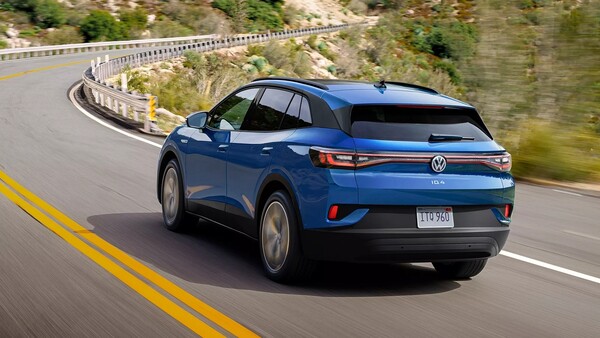
Volkswagen's U.S. electric vehicle sales fell about 90 percent in the third quarter from a year earlier. An analysis said the sharp drop was largely due to fewer vehicles to sell, after Volkswagen halted local production and delayed new model launches in response to slowing EV demand.
InsideEVs reported on Oct. 13, local time, that Volkswagen sold 1,421 EVs in the United States in July to September. That was about 90 percent less than a year earlier.
By model, sales of the ID.4 electric sport utility vehicle totalled 989 vehicles, down 92.1 percent from 12,470 a year earlier. Sales of the ID.Buzz electric minivan fell 82.5 percent to 432 from 2,469.
Volkswagen's total U.S. vehicle sales fell 10.9 percent to 78,179. Cumulative EV sales in January to September totalled 6,107, down 77 percent from a year earlier.
A key factor behind the plunge is a gap in the EV lineup. Volkswagen halted ID.4 production in April at its Chattanooga, Tennessee plant and decided to focus on producing internal combustion engine SUVs.
ID.Buzz imports into the United States have also been suspended, and it is currently being sold mainly from existing inventory. To clear inventory, Volkswagen offered discounts of up to $12,500, or 16,748,800 won, on the ID.4.
By contrast, the ID.Buzz was assessed as having limited price competitiveness, with a high starting price of $61,545, or 82,427,200 won, and a maximum driving range of 234 miles, or about 376.5 km.
Volkswagen plans to revamp its lineup with the ID.Tiguan, a successor model to the ID.4 electric SUV. It is due to launch in Europe in early 2027, but the timing of a U.S. launch has not yet been confirmed.
The ID.Buzz is set to return to the U.S. market as a 2028 model with improved charging and software functions.
Whether Volkswagen can close the gap in new models and regain competitiveness in the U.S. EV market is seen as key to a rebound in sales.
 Jae-won Choi
ittt_0801@d-today.co.kr
Jae-won Choi
ittt_0801@d-today.co.kr