
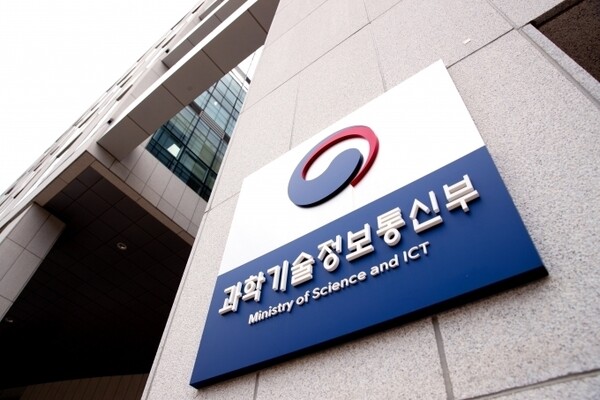
South Korea's Ministry of Science and ICT on Tuesday launched the "K-Moonshot Semiconductor Operating Committee and Technology Committee" and discussed a technology roadmap and implementation directions to secure next-generation foundational semiconductor technologies.
K-Moonshot is a programme that combines AI with science and technology to solve national challenges and accelerate technological innovation. The semiconductor field, one of 12 missions, aims to overcome limits in semiconductor performance and power efficiency by securing next-generation foundational technologies.
It focuses on building a memory-centric computing system and increasing AI computing productivity per watt. The ministry explained that semiconductor competition is shifting from the miniaturisation of a single chip to a "full-stack" approach integrating devices, processes, memory, packaging and systems.
As a result, it will move to develop next-generation stacked semiconductor technologies represented by ultrascaled semiconductors and high-bandwidth memory (HBM) to overcome the limits of existing miniaturisation. It will also pursue integrated demonstrations that implement individual technologies at the system level and verify performance.
The operating committee being launched will be chaired by Ji-young Kim (김지영), the semiconductor programme director (PD), and include experts from industry, academia and research, including the ministry, the National Research Foundation of Korea, Samsung Electronics, SK Hynix and Jusung Engineering. The committee will be responsible for establishing and revising basic plans for related research and development projects, and deliberating and coordinating key implementation matters. A separately organised technology committee will support the establishment of the semiconductor technology roadmap, planning detailed tasks, checking R&D progress and managing targets.
At the operating committee meeting, participants discussed priorities for core technologies and phased targets, ways to link with existing semiconductor R&D projects, and an integrated demonstration plan reflecting industry demand.
Sung-su Kim (김성수), head of the ministry's R&D Policy Office, said, "We will systematically 추진 the K-Moonshot semiconductor mission so that we can bring together the capabilities of industry, academia and research to proactively secure core foundational technologies for future semiconductors and ensure research outcomes translate into competitiveness at industrial sites."
 Jin-ho Lee
jhlee26@d-today.co.kr
Jin-ho Lee
jhlee26@d-today.co.kr