
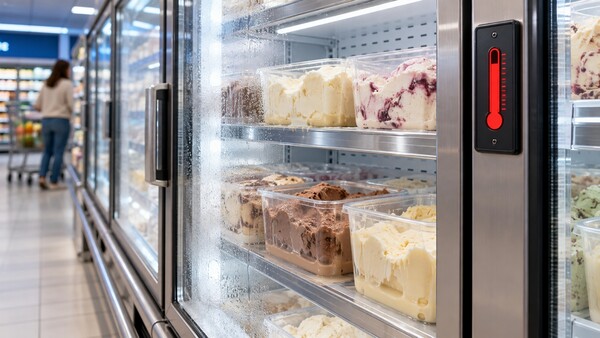
Hundreds of large supermarkets in France were hit by a cyberattack that caused refrigeration and freezing equipment to malfunction. Losses are spreading as hackers remotely manipulated fridge temperatures, leading to the disposal of large quantities of fresh and frozen food.
Japan's GIGAZINE reported on Oct. 13 that a cyberattack targeting refrigerated temperature management systems hit supermarkets across France between the night of Oct. 11 and Oct. 12.
The affected companies included E. Leclerc, Intermarche and Cooperative U. Intermarche and its discount affiliate Netto were reported to have had at least 300 stores affected, while Cooperative U had more than 100 stores impacted.
Hackers are believed to have remotely activated the refrigeration systems' automatic defrost function, driving temperatures abnormally high. At some stores, the set temperature rose to 50 degrees Celsius, and chilled and frozen food was exposed to high temperatures for extended periods and discarded.
The affected stores were using refrigeration temperature management systems made by Denmark's Danfoss. Danfoss said the AK-SM800 and AK-SC355 series were the main products hit.
Most of the affected equipment was older products for which software and security update support had ended. Danfoss said it had continuously recommended that customers replace the equipment.
The security industry is also focusing on vulnerabilities previously found in Danfoss refrigeration control systems. Last year, an authentication bypass vulnerability, CVE-2025-41450, and a command injection vulnerability, CVE-2025-41451, were disclosed, and security researchers demonstrated the possibility of remote code execution using them. It has not been confirmed whether those vulnerabilities were actually exploited in this attack.
France's National Cybersecurity Agency (ANSSI) recommended cutting internet connections to affected systems and restricting access. Paris prosecutors have also launched an investigation, and French authorities are examining the possibility that damage could spread to other European countries.
 Jae-won Choi
ittt_0801@d-today.co.kr
Jae-won Choi
ittt_0801@d-today.co.kr