
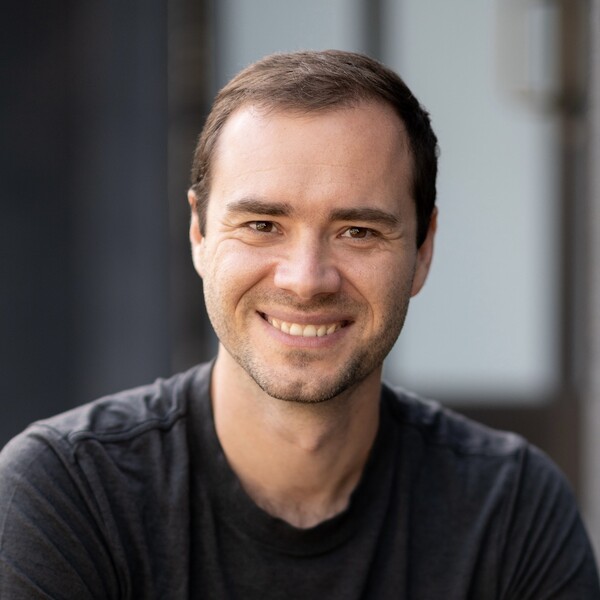
[Digital Today reporter Yoonseo Lee] Andrej Karpathy (안드레이 카파시), an OpenAI co-founder, said the understanding gap is widening between the public and frontline artificial intelligence users.
Business Insider reported on Oct. 12 (local time) that Karpathy wrote on X, formerly Twitter, that AI adoption is still at an early stage and that only a very small number of people actually feel the real performance of frontier models.
Karpathy estimated that about 6 billion people, or roughly 75 percent of the world's population, have not tried large language models (LLMs). He said most of the remaining 1 billion to 2 billion people only occasionally use free versions of services such as ChatGPT, making it hard to say they have fully experienced AI capabilities.
Karpathy focused on the gap between ordinary chatbot users and the group that uses cutting-edge models in real work. He estimated about 20 million people use frontier models for coding, about 0.2 percent of the world's population. He said they see it as possible to hand large projects that used to take weeks or months to an AI agent with a single prompt.
Karpathy again referred to the perception gap among AI users that he pointed out in April. He said the number of users drops sharply as use moves into deeper stages. He said most people only encounter AI superficially, while a very small number use frontier models for work and experience their capabilities differently.
The smallest group is about 5,000 people with internal access to cutting-edge AI systems. Karpathy estimated they work at big tech companies and have direct access to the latest systems. He said infringement incidents involving OpenAI and Hugging Face showed the direction of AI development going forward. He said a situation could emerge in which thousands of agents collaborate on large software projects, increase the speed of cyberattacks and defenses, and advance science and mathematics research.
Karpathy also said the pace of AI development is becoming hard for humans to keep up with in terms of review capacity. He said work to analyze the circumstances of the OpenAI and Hugging Face incidents continues even months later, and that mathematicians also expect it will take substantial time to review 722 manuscripts in advanced mathematics.
Industry figures also expressed agreement. Aaron Levie (아론 레비), CEO of Box, said Karpathy's post helps in understanding the current level of AI. Levie said most people use AI as a next-generation search tool or a simple conversational chatbot, but that such experience can make it easy to underestimate AI capabilities.
Garry Tan (개리 탄), CEO of Y Combinator, said now is the time to join an AI lab. He wrote on X, "Join today's 5,000," underscoring the importance of opportunities to access and use the latest AI first.
Their comments show an understanding that the AI use gap goes beyond whether people use it at all, and depends on the level of models they can access and how they use them. While ordinary users experience AI through conversations with chatbots, leading companies and some developers assign complex tasks to agents and feel capabilities at a different level.
Judging by my tl there is a growing gap in understanding of AI capability. The first issue I think is around recency and tier of use. I think a lot of people tried the free tier of ChatGPT somewhere last year and allowed it to inform their views on AI a little too much. This is a group of reactions laughing at various quirks of the models, hallucinations, etc. Yes I also saw the viral videos of OpenAI's Advanced Voice mode fumbling simple queries like "should I drive or walk to the carwash". The thing is that these free and old/deprecated models don't reflect the capability in the latest round of state of the art agentic models of this year, especially OpenAI Codex and Claude Code. But that brings me to the second issue. Even if people paid $200/month to use the state of the art models, a lot of the capabilities are relatively "peaky" in highly technical areas. Typical queries around search, writing, advice, etc. are *not* the domain that has made the most noticeable and dramatic strides in capability. Partly, this is due to the technical details of reinforcement learning and its use of verifiable rewards. But partly, it's also because these use cases are not sufficiently prioritized by the companies in their hillclimbing because they don't lead to as much $$$ value. The goldmines are elsewhere, and the focus comes along. So that brings me to the second group of people, who *both* 1) pay for and use the state of the art frontier agentic models (OpenAI Codex / Claude Code) and 2) do so professionally in technical domains like programming, math and research. This group of people is subject to the highest amount of "AI Psychosis" because the recent improvements in these domains as of this year have been nothing short of staggering. When you hand a computer terminal to one of these models, you can now watch them melt programming problems that you'd normally expect to take days/weeks of work. It's this second group of people that assigns a much greater gravity to the capabilities, their slope, and various cyber-related repercussions. TLDR the people in these two groups are speaking past each other. It really is simultaneously the case that OpenAI's free and I think slightly orphaned (?) "Advanced Voice Mode" will fumble the dumbest questions in your Instagram's reels and *at the same time*, OpenAI's highest-tier and paid Codex model will go off for 1 hour to coherently restructure an entire code base, or find and exploit vulnerabilities in computer systems. This part really works and has made dramatic strides because 2 properties: 1) these domains offer explicit reward functions that are verifiable meaning they are easily amenable to reinforcement learning training (e.g. unit tests passed yes or no, in contrast to writing, which is much harder to explicitly judge), but also 2) they are a lot more valuable in b2b settings, meaning that the biggest fraction of the team is focused on improving them. So here we are.
 Yoonseo Lee
yslee@d-today.co.kr
Yoonseo Lee
yslee@d-today.co.kr