
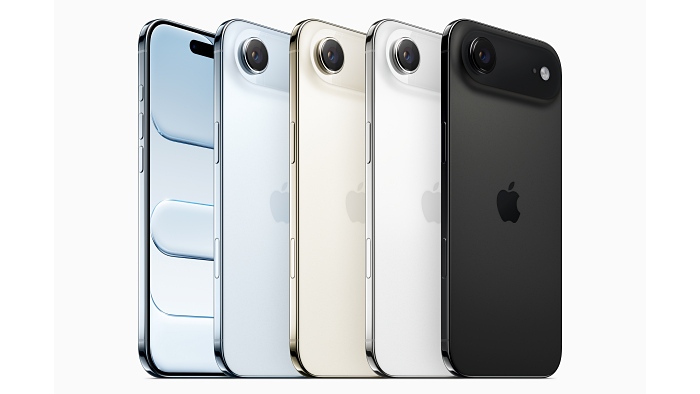
Apple is continuing development of a follow-up model to the iPhone Air, which has been assessed as failing to meet sales expectations, according to a report.
IT media outlet NineToFiveMac reported on Oct. 12 that the second-generation iPhone Air is being prepared to address the limits of its ultra-thin design.
The biggest change disclosed so far is the camera. The first-generation iPhone Air prioritized a slim design and included only 1 rear camera. Apple is said to be pushing a plan to change that setup. A compilation of multiple supply chain information and foreign media reports suggests the iPhone Air 2 is likely to add a second rear camera. The new camera is seen as more likely to be ultra-wide than telephoto. In that case, it would use a main and ultra-wide camera combination, like the base iPhone.
The launch schedule has slipped from earlier expectations. The iPhone Air is known to have fallen short of sales expectations, and Apple was said to have reviewed the timetable for the next model at one point. Reports have said Apple told engineers and suppliers it had removed the next iPhone Air from its schedule, but did not present a new launch timing. The plan has not been completely scrapped, and the second-generation model is still under development, the report said.
An A20 Pro chip is cited as a key performance upgrade. The iPhone Air 2 is expected to include the A20 Pro, one step up from the current model's A19 Pro. The chip could become Apple's first 2-nanometer iPhone processor. The goal is to boost both performance and power efficiency within the same size.
A change in packaging method is also drawing attention. The A20 Pro is being discussed as applying wafer-level multi-chip module technology that integrates the system-on-chip and DRAM at the wafer stage. Apple appears to be aiming to increase performance and reduce power consumption through this.
The battery was also cited as a target for improvement. Supply chain leak information suggests the iPhone Air 2 battery capacity is expected to be 3,500 mAh. That would be an increase of more than 10 percent compared with the first-generation iPhone Air's 3,149 mAh. If the A20 Pro also improves power efficiency, usage time could increase as well. Actual battery life varies depending on multiple conditions, so exact figures will need to be confirmed after Apple's official disclosure.
A change in heat control equipment was also flagged. The iPhone Air 2 could include a vapor chamber cooling system. Apple introduced the technology for the first time in the iPhone 17 Pro and emphasized improved heat dissipation and sustained performance. If the same technology is applied, the focus is expected to be on keeping device temperatures more stable and maintaining high performance longer even during high-load tasks.
The expected launch timing is being adjusted again. The iPhone Air 2 was originally expected to come out with the iPhone 18 Pro series in September 2026, but recently a plan has been discussed to launch it with the base iPhone 18 in spring 2027. This schedule change is being read as part of a flow in which the product competitiveness and configuration of the ultra-thin lineup are being reviewed together.
Ultimately, the key question for the iPhone Air 2 is how much it can shore up the camera, battery and heat issues cited as weaknesses of the first generation while keeping a slim thickness. Since Apple once excluded the next model from its schedule, there remains room for the final specifications and launch timing to be adjusted.
 Jinju Hong (홍진주)
hongjj@d-today.co.kr
Jinju Hong (홍진주)
hongjj@d-today.co.kr