
Ultrahuman has teamed up with the Abu Dhabi Public Health Centre to develop a biological age model aimed at deployment across the United Arab Emirates (UAE). The two sides signed a two-year memorandum of understanding and will develop and validate a model combining clinical biomarkers and wearable-device data.
TechCrunch reported on Sunday that the model focuses on estimating an individual’s rate of ageing and identifying factors that speed up or slow ageing, such as sleep, physical activity, cardiovascular health and metabolic status. Ultrahuman plans to gradually expand the model to a broader population in the UAE once validation is complete. It did not disclose a specific rollout date.
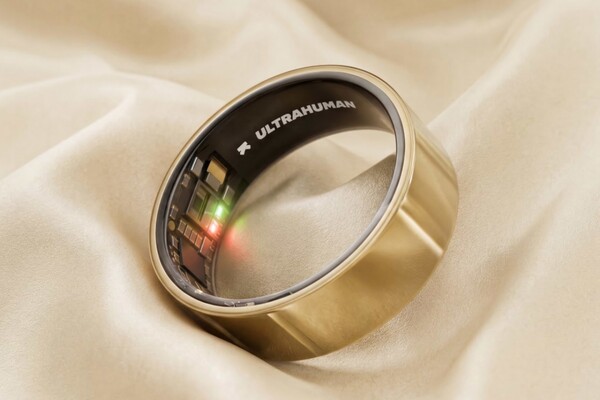
The partnership comes as Ultrahuman moves beyond smart ring sales into health algorithms. Chief Executive Mohit Kumar (모힛 쿠마르) said the Ultrahuman Ring is a way to obtain human-body data, but what the company considers more important is how the data are used. He said the core is not the ring form itself but what is done with the data.
Ultrahuman has sold about 800,000 smart rings worldwide so far. It has limits in seeing a broad population using only its own customer base. Kumar said most users are currently concentrated between the ages of 25 and 43, but applying the model across the UAE would provide access to data from a much wider range of ages. He also stressed that working with the government is an opportunity to apply algorithms to a population far broader than the company’s customer base.
The model is designed not to be tied to a specific device. It can use data from rings as well as wrist-worn devices, straps and patches, alongside clinical biomarkers. Users are expected to be able over the long term to check their health age through the UAE government’s digital health platforms TAMM and Sahatna.
Ultrahuman said it built the base model from existing user data. It combines chronological age with wearable signals and blood-test indicators from some users to track how health indicators change with age and to identify changes that deviate from that pattern. Kumar drew a line against the model learning from UAE data as part of the programme. He said the company is applying its algorithm to UAE data and that Ultrahuman does not access personally identifiable information.
From a market perspective, the UAE is already one of Ultrahuman’s top 10 markets. It accounts for about 4 to 5 percent of total revenue, and the company has operated locally for about 5 years. Kumar said user retention in the UAE is about 25 percent higher than in other markets.
Abu Dhabi health authorities are also expanding cooperation with wearable companies in preventive medicine. The Abu Dhabi Department of Health announced a cooperation plan in May with Ultrahuman rival Oura. Oura is working to combine wearable data with local long-term health data, prioritising women’s health and cardiovascular and metabolic risks. Kumar said he was not aware of other companies participating specifically in the health-age model itself, but acknowledged that the government is working with multiple health-tech companies.
Amid the trend, Ultrahuman and Oura are shifting their business focus beyond smart ring competition into preventive medicine and health data. Ultrahuman is also pursuing development of a smart ring that runs software on the device and supports artificial intelligence interactions and even games, and the scalability of data collected and services after hardware sales is expected to emerge as a key variable in future competition.
 Jinju Hong
hongjj@d-today.co.kr
Jinju Hong
hongjj@d-today.co.kr