
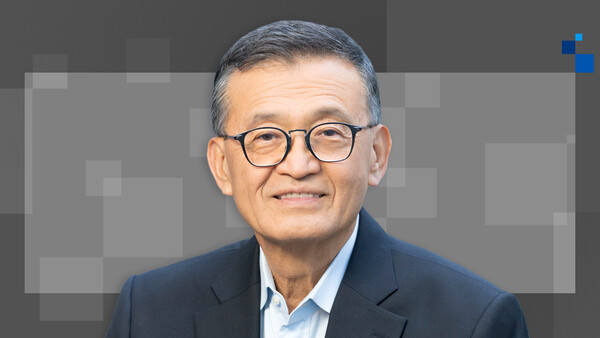
Intel Chief Executive Lip-Bu Tan (립부 탄) publicly defended China's open-weight AI models, Cryptopolitan, a blockchain media outlet, reported on Oct. 12 local time.
Tan, speaking at a panel event hosted by Singapore's DBS, named DeepSeek, Kimi and GLM and said the models were "good enough."
Tan backed an open AI ecosystem. He said he strongly believes in open source and stressed that models from Chinese research labs also have strengths in cost efficiency. He added that the market should decide which model is suitable for which task, and said the current adoption pace is very fast.
The remarks align with an earlier position from Nvidia CEO Jensen Huang (젠슨 황). In July, Huang dismissed concerns that Chinese AI would push out U.S. companies and argued that U.S. companies should "absolutely" be allowed to use China's open-source models. At the time, he called models from Chinese research labs "excellent."
A point where market and policy views diverge is that Intel's comments concerned Chinese AI research labs that are under U.S. government scrutiny. The Federal Bureau of Investigation, the National Security Agency and the Cybersecurity and Infrastructure Security Agency said in a joint advisory in September that Chinese companies, including DeepSeek, Moonshot AI's Kimi and Z.ai's GLM, had carried out large-scale distillation efforts against U.S. models since late 2024.
Distillation is a method of training smaller models by learning from the outputs of larger models and is commonly used in research. The U.S. government, however, is taking issue with the scale and intent of the work by Chinese companies. Tan's remarks have drawn more attention because they came while this investigative approach is under way.
Regulatory debate over open-weight models is also continuing. Nvidia joined Microsoft, Meta, Hugging Face, Mistral and others that month in signing an open letter urging policymakers to refrain from hasty regulation. The letter did not mention China directly, but it came alongside reports that the Trump administration and Treasury Secretary Scott Bessent were reviewing possible bans and sanctions.
Intel's corporate governance is also difficult to separate from the controversy. Intel said it would receive a $8.9 billion investment through a deal with the Trump administration in which the U.S. government buys 433.3 million shares at $20.47 per share. The stake is 9.9 percent. Including existing subsidies under the CHIPS Act, the scale of government support reaches $11.1 billion.
This structure makes the interests of the U.S. government and Intel more complex. Trump has previously said the government could also hold stakes in OpenAI and Anthropic in a way similar to Intel. The two companies are U.S. AI research labs that have strongly raised the issue of distillation by China. In that case, the U.S. government would simultaneously have interests on both sides: a semiconductor company that rates Chinese models highly, and U.S. AI research labs that take issue with those models.
Tan also mentioned prospects not only for AI but for quantum computing on the day. He said quantum computing could enter the mainstream in the next 3 to 5 years. He added, however, that the key point of the remarks was not a technology outlook but that Intel's top executive publicly supported open-weight models from Chinese AI research labs that the U.S. government is investigating. The gap between U.S. regulation of China-related AI and companies' practical choices has surfaced again.
 Jinju Hong
hongjj@d-today.co.kr
Jinju Hong
hongjj@d-today.co.kr