
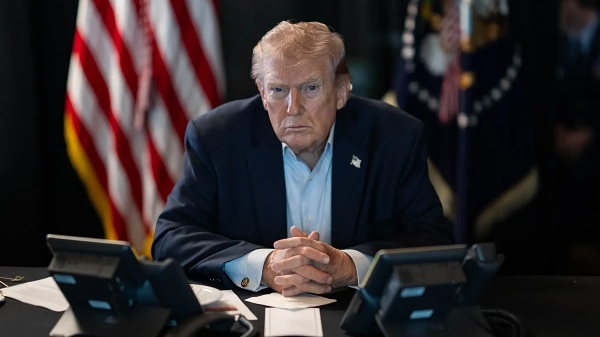
U.S. President Donald Trump is seeking to import Russian diesel to lower fuel prices in the United States, but the effort has become mired in controversy, including questions over feasibility, as congressional sanctions collide with the war in Ukraine.
On Oct. 12, blockchain media outlet Cryptopolitan reported that the Trump administration temporarily waived sanctions on Russian diesel. But significant hurdles remain before any deal, given existing laws and political backlash.
The idea emerged as rising energy prices add to Trump's political burden ahead of next month's U.S. midterm elections. With Russian forces continuing attacks on Ukraine, some Republicans have raised objections that U.S. money could effectively flow to Russia.
The main issue is a legal clash. Republican Senator Thom Tillis (톰 틸리스) said there are valid grounds for the claim that the president is not complying with the law. A 2022 executive order bans imports of Russian energy products, and a law signed last month limits U.S. investment in Russia's energy sector. Critics say a sanctions waiver does not automatically lift existing restrictions.
Tillis said Trump must take the matter seriously if he wants a military operations budget and additional year-end budget support, stressing he is not alone in his concerns. Republican Representative Don Bacon (돈 베이컨) also criticised the move, saying it is morally wrong to prop up Russia's war economy and that Russia is using the money to bomb cities.
Republican Senator John Barrasso (존 바라소) said Trump is making difficult decisions to cut energy costs while responding to international tensions. He urged enforcement of the Russia sanctions passed by Congress last month.
Questions have also been raised about the plan's economic effectiveness. Analysts see Russian diesel imports as unlikely to keep fuel prices down on a sustained basis. They say the main cause of this year's fuel crisis has been attacks on Iran by the United States and Israel since February and Iran's restrictions on transit through the Strait of Hormuz in response. The Strait of Hormuz is a major energy shipping route.
Trump said over the weekend that Russia and Ukraine agreed to stop attacking each other's power and fuel infrastructure. But neither side independently confirmed the agreement. It was the second unverified ceasefire announcement in recent weeks.
Ukrainian President Volodymyr Zelenskiy (볼로디미르 젤렌스키) said at an event in Poland on Oct. 13 that at least 6 Ukrainian energy-related facilities were hit in Russian overnight and morning attacks and that there were fatalities. He also said drone attacks damaged gas facilities and gas stations. Zelenskiy criticised Russia in a post on X, formerly Twitter, saying it had no intention of accepting an energy truce proposed by the United States and was continuing attacks because it saw an opportunity to increase the revenue needed to wage war.
Zelenskiy criticised Russian diesel deals as a step back from the West's existing policy aimed at isolating Russia's economy. Trump further stoked tensions between the two countries by arguing that Ukraine should elect a new president. He said Zelenskiy had chances to reach several agreements but did not follow through.
European allies of Ukraine also questioned the substance of any ceasefire deal. On Oct. 13, they backed Ukraine and approved the European Union's largest new Russia sanctions package since Russia's full-scale invasion in 2022.
Tillis said that to address the energy supply crunch, the Iran issue should be resolved before importing Russian diesel, and that it must be acknowledged that Russian President Vladimir Putin started the war in Ukraine. Whether Russian diesel imports can lower fuel prices remains uncertain, and legal constraints, diplomatic conflict and supply chain issues still need to be addressed at the same time.
We currently see no signs from Russia that it wants to end the war. We see no basic steps toward de-escalation. Everyone is talking about diesel and forgetting about grain. In a month or two, everyone will start talking about an agricultural crisis. There won’t be enough food for countries across Africa, some Asian countries, and the Middle East, because we export millions of tons of grain to these very markets. And now Russia is blocking the sea. The United States isn’t feeling the effects of this, which is why the focus is only on energy. This is another challenge. It’s hunger. And it can affect many countries. And we need to think about everything and everyone, because we all live on this planet. We can prevent many different crises before they even begin and avert the challenges they bring. From remarks at the Warsaw Security Forum. (2)
 Seung-ah Yoo
ysah@d-today.co.kr
Seung-ah Yoo
ysah@d-today.co.kr