
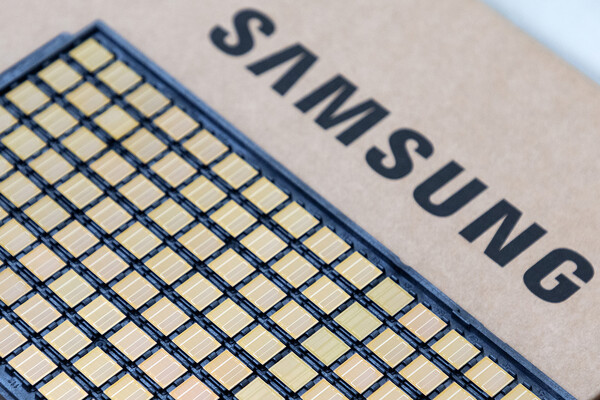
Samsung Electronics is spreading its semiconductor research, testing and production bases across Japan, Vietnam and the United States. As AI chip demand prolongs a memory supply crunch and even companies that used to buy chips move into in-house production, the strategy is to build alternative supply sources so customers can receive volumes without disruption. It is also seen as a move to redesign its regional research, testing and production system in preparation for a fight to secure customers after shortages ease, at a time when profits are rising on a memory boom.
Samsung Electronics on Oct. 8 announced preliminary results showing third-quarter operating profit of 10.74 trillion won, up 780 percent from a year earlier. Most of the profit came from memory. Hana Securities analysed that memory operating profit exceeded total profit for the semiconductor division as the display, mobile and home appliance businesses posted small profits or losses and System LSI and foundry operations posted losses. Samsung Electronics is set to release final results including performance by division.
Samsung Electronics' earnings are currently being lifted by higher memory prices, and what is pushing prices up is a supply shortage. According to Hana Securities, third-quarter DRAM prices rose 20 percent from the previous quarter, and customers without long-term supply contracts are paying higher prices. The shortage is likely to continue through 2028 even after accounting for the expansion schedules of the three major DRAM makers.
Companies that used to buy semiconductors are moving into direct production. Hanwha Investment & Securities said Tesla and SpaceX are pursuing an in-house semiconductor fab called TerraFab, judging it difficult to secure stable volumes with capacity expansions by existing foundry and memory makers alone. For customers, whether they can receive volumes on time has become the criterion for choosing a supplier.
Samsung Electronics is responding by placing research, testing and production in different countries. All three are outside South Korea. In Yokohama, Japan, it is building an advanced packaging research base (APL) at a cost of 35 billion yen. It will conduct next-generation chip research, including high-bandwidth memory (HBM) and 2.5D and 3D packaging, with Japanese materials, components and equipment companies. In Thai Nguyen, Vietnam, it is pursuing a $1.5 billion back-end processing base that will handle pre-shipment inspection and packaging. In Taylor, Texas, it is building an advanced foundry production line linked to subsidies under the U.S. CHIPS Act. It is a base for producing chips directly in the United States, where big tech customers are concentrated.
After memory supply shortages ease, Tesla and SpaceX move into direct chip production.
The three bases target customers that avoid suppliers with production concentrated in one region. TSMC keeps most of its leading-edge process production in Taiwan. It is increasing overseas fabs in the United States and elsewhere, but the centre of advanced chip production remains Taiwan. If variables such as cross-strait tensions or earthquakes arise, customers' chip supply can be shaken together.
Big tech companies such as Nvidia, Microsoft and Meta are therefore looking for suppliers beyond TSMC. With AI chip orders concentrated at one company, they are concerned about rising unit prices and supply delays. Samsung Electronics is seen as seeking to present a system that divides research, testing and production across multiple regions as a condition for an alternative supplier that these customers want.
Beyond memory demand conditions, another reason Samsung Electronics is accelerating is changes in the semiconductor competitive market. While it prepares for supplier competition, new chip makers are also emerging one after another.
According to Hanwha Investment & Securities, Tesla broke ground in April on a $3 billion research fab in Giga Texas, and SpaceX in August confirmed Grimes County, Texas, as the site for a large-scale TerraFab. The first-phase investment alone is more than $16.8 billion. TerraFab combines logic and memory wafer manufacturing, advanced packaging and testing in one base. Unlike traditional contract manufacturing, it allows repeated development from design to testing within a single fab. Initial production will start with Intel's 14A process, and Intel has also made its participation in the project official. That means a chip demand customer is building its own production base in Texas, where Samsung Electronics is building the Taylor fab.
The timing for TerraFab's large-scale mass production has not yet been officially confirmed, but the industry expects full-scale production to begin after 2 to 3 years. Hanwha Investment & Securities forecast that equipment and processes for the mass-production fab will be decided in the meantime. Coincidentally, that timing overlaps with 2028, the peak of the supply shortage. If memory production plans become concrete, the benefits could also spread to South Korean memory supply chains, including Samsung Electronics.
Samsung Electronics' strategy of dispersing bases can also be seen as preparation for which supplier customers will choose after shortages ease. The remaining variable is whether TerraFab will add a new producer to that set of choices. An industry official said the most important factor for big tech companies when selecting a semiconductor foundry is supply chain disruption. "In the past, unit prices and process technology capabilities were important, but now stable operating capacity to receive 100 percent of chips at the desired time is the top priority," the official said.
 Suk Dae-geon
d2dg@d-today.co.kr
Suk Dae-geon
d2dg@d-today.co.kr