
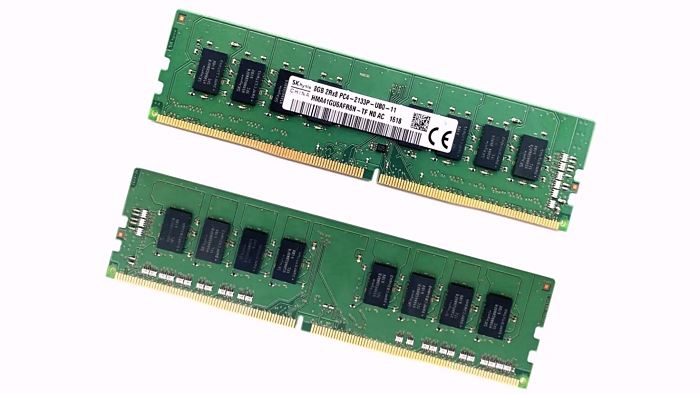
Rising DDR5 memory prices are making PC upgrades more burdensome, prompting Intel and AMD to revisit older platforms that support DDR4. The Verge reported on Oct. 9 that Gigabyte said two of its motherboard lines will support upcoming processors based on Intel's LGA 1700 socket.
LGA 1700 was introduced with the 12th-generation Alder Lake in 2021. The socket supported both DDR4 and DDR5, but Intel switched it to DDR5-only in 2024. Gigabyte said dual memory support will be applied again and new LGA 1700 chips are expected to launch in early 2027.
Intel did not immediately respond to related inquiries. The shift is seen as a move to offer an option that allows users to upgrade to a new CPU without also buying expensive DDR5 memory.
AMD is moving in a similar direction. Gigabyte unveiled a new motherboard series for AMD's DDR4-compatible AM4 platform in August. It was timed for the 10th anniversary of the re-release of the Ryzen 7 5800X3D.
Behind the move is the price gap between DDR4 and DDR5. DDR4 came to market in 2014 and was followed by faster DDR5. Buying new hardware based on technology that is typically more than 10 years old can be inefficient, but a recent memory shortage has changed the situation. DDR4 prices have risen, but by less than DDR5.
A Corsair Vengeance DDR5 32GB kit now costs $620, while a comparable DDR4 kit is about $260. DDR4 is also more expensive than in mid-2025, but DDR5 is priced far higher. DDR5 has strengths in speed and power efficiency, but current prices are weakening those advantages.
The return of older sockets and chipsets shows that memory prices may not fall easily for some time. Demand to keep using existing DDR4 memory is now more likely to continue.
 Choo Hyun-woo
cookinpapa@d-today.co.kr
Choo Hyun-woo
cookinpapa@d-today.co.kr