
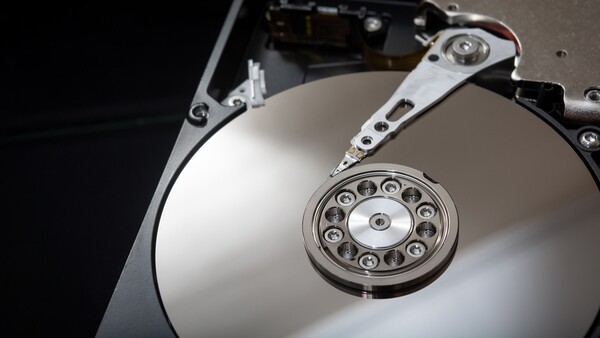
As demand for large-capacity storage devices surges with the expansion of AI data centres, Toshiba is moving to expand HDD production.
TechRadar reported on Wednesday that Toshiba will invest about 60 billion yen to expand HDD production facilities in the Philippines. It aims to nearly double annual production capacity for AI and cloud HDDs by fiscal 2027, compared with fiscal 2025 on a storage-capacity basis. It would mark the first large-scale expansion of its HDD business in about 5 years.
The new production line will make high-capacity products that can store up to 40 percent more data per drive than existing products. Toshiba plans mass production of 65-terabyte-class HDDs around 2030 and then plans to develop products up to 100-terabyte class. Increasing capacity per drive would allow data centres to be supplied with more storage space without raising the number of products by the same proportion.
The backdrop is a surge in data generated by AI. SSDs offer faster read and write speeds, but for large-scale storage they carry a higher cost burden than HDDs. The outlet said, "SSD storage costs are about 20 times higher than HDDs." It said HDDs remain competitive for AI data centres where large capacity and long-term storage matter more than immediate processing speed.
Supply shortages are also appearing at rivals. Seagate has allocated most of its nearline HDD production capacity through 2028, and some customers are discussing volumes beyond 2029. Western Digital has also secured a large portion of its 2027 volumes through long-term contracts, and output after that is also being preempted.
Parts suppliers are also expanding. Nitto Denko plans to invest 28 billion yen to expand production of its "CISFLEX" product for HDD magnetic-head suspensions, raising production capacity in fiscal 2028 by 40 percent from 2025.
Toshiba also plans to expand automation in inspection and clean-room processes at its Philippine plant. It aims to reduce additional staffing needs for the expansion by about 40 percent versus existing methods and raise yields. It also aims to raise its global HDD market share, currently a little over 10 percent on a storage-capacity basis, to 30 percent in the medium term.
 Jae-won Choi
ittt_0801@d-today.co.kr
Jae-won Choi
ittt_0801@d-today.co.kr