
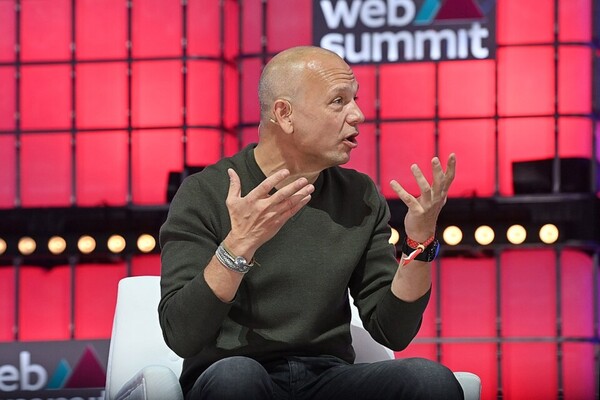
Tony Fadell (토니 파델), known as the “father of the iPod,” pointed to a lack of practicality and trust as reasons early artificial intelligence devices failed to gain traction in the market.
TechCrunch reported on Oct. 7 that Fadell cited Rabbit R1, Humane AI Pin and the Limitless pendant as first-generation AI products at an MIT Future Fest event, saying they did not address actual user demand.
Calling the devices in question, Fadell said, “You really have to understand what you are trying to do and what inconvenience you are trying to solve.” He said, “These products did not meet any need and remained interesting only to people who are very interested in technology.” They touted convenience like a personal assistant, but their performance fell short of expectations, and they did not sufficiently explain how ordinary consumers could use them in daily life.
He said the concept of an AI assistant itself is not yet mainstream. “Less than 0.01 percent of the world’s population has had help from a human assistant,” Fadell said. “Most consumers do not even know what an assistant is,” he said. While a vision is being presented of AI agents handling life end to end, he said there are several steps left before ordinary users and companies accept it.
The key is trust. “Even if you hire a person as an assistant, you do not hand over access to your bank account on the first day,” Fadell said. “It takes time to build trust to the level of entrusting sensitive data, schedule coordination and financial tasks,” he said. He said complete security must be a prerequisite for AI assistants to be valuable.
He said this thinking also aligns with a recently launched general-purpose AI assistant. Meta recently released “Muse,” but a security researcher found a serious vulnerability shortly after launch. There were also reports that several teams inside Meta worked overtime before the launch to urgently fix security issues. “Trust and safety will become most important when you entrust work to intelligence of any kind,” Fadell said.
Fadell named Apple as the company currently closest to meeting those conditions. “The company that seems able to do this right now is Apple,” he said, adding that Apple has the hardware, chips and all the needed components. He said Apple’s own AI capabilities are also not sufficient. He mentioned that the new Siri AI runs on a customized version based on Google’s Gemini.
On what a successful AI agent should look like, he proposed an on-device approach. He said it should run inside the device for privacy protection and light weight. Of a data center-centric approach, Fadell said, “I don’t see it that way.” He said devices now have sufficient performance and more computing power. He said keeping sensitive information on the device, rather than continuously sending it to the cloud, can win user trust.
He pointed to Apple’s widely deployed device ecosystem as a reason it has an advantage over rivals. Fadell said Meta and OpenAI are turning to device development because “they don’t have a base like Apple that has deployed billions of devices.” He said an approach is emerging in which camera, audio and location collection functions are integrated into dedicated devices and connected via phones, Bluetooth, Wi-Fi and fifth-generation mobile communications, rather than requesting smartphone sensor access in stages.
Still, he drew a line that hardware strength does not guarantee success straight away. Asked about product-market fit at the event, Fadell said it is harder for startups to recover from failure. “Startups have only one chance,” he said, adding that big companies have the leeway to continue trying after a product fails. He said it was confirmed again that in the AI device market, companies that clearly define user problems first and build a structure that can earn trust will survive, before performance.
 Jinju Hong
hongjj@d-today.co.kr
Jinju Hong
hongjj@d-today.co.kr