
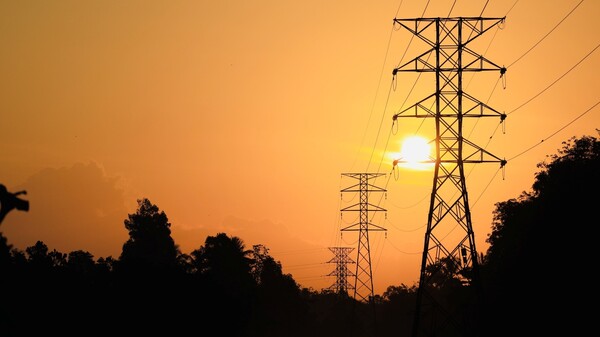
U.S. power demand is expected to set record highs in both 2026 and 2027.
Cryptopolitan, a blockchain outlet, reported on Monday that the U.S. Energy Information Administration (EIA) expects U.S. power demand to rise to 428.8 billion kWh in 2026 and 435.6 billion kWh in 2027 from 419.5 billion kWh in 2025.
The increase is being attributed to the expansion of AI data centres and cryptocurrency infrastructure, along with the electrification of heating and transport. U.S. electricity consumption is already high, but added pressure is building as data centre construction and broader growth in electricity use across industry overlap.
By sector, commercial power sales are expected to reach a record 154.9 billion kWh this year. Commercial demand, which includes data centres, is structured to surge first. Residential sales were put at 154.1 billion kWh, while industrial sales were listed at 105.5 billion kWh.
Electricity prices are also rising. The EIA expects average wholesale power prices in 2026 to rise to $52 per MWh, up 11 percent from 2025. Extreme weather conditions were cited as a main factor. By region, PJM prices are expected to rise 41 percent, while Mid-Columbia prices are forecast to fall 23 percent.
The surge in power demand is not only a U.S. problem. Gartner forecast data centre power consumption will rise 26 percent to 565 TWh this year from 447 TWh in 2025. It also said consumption could exceed 1,200 TWh in 2030. AI-optimised servers are expected to account for 31 percent of data centre electricity use this year. Global data centre power demand is expected to rise to 290 GW in 2030 from 132 GW in 2026.
Against this backdrop, the core of competition in AI infrastructure is also shifting. The outlet reported that chips are no longer the only bottleneck. Grid connections, energy contracts, generation capacity and permitting are determining construction of new computing facilities. That means access to electricity is becoming a competitive advantage.
The Berkeley Lab estimated U.S. data centres could use up to 11.8 percent of total U.S. electricity consumption in 2030. The estimated range is 9.5 percent to 15.3 percent, and the baseline scenario reaches 649 TWh. The International Energy Agency (IEA) also said in its annual report that global power demand will rise 3.6 percent in 2026 and 3.8 percent in 2027. That is above 3 percent the year before.
Cryptocurrency infrastructure has also moved to the centre of competition for electricity. Bitcoin miners already control sites with power supplied and have secured grid connections, highlighting that they hold assets AI developers need. The U.S. queue for grid interconnections totals about 2,600 GW.
The gap in asset values is also widening. CoinShares recently valued a stabilised AI facility at about $27 million per MW in one transaction. By contrast, the value of mining equipment that is connected to power but not leased was put at less than $3 million. That means the economics of the AI infrastructure market are being rapidly reshaped.
Ultimately, the scarcer asset in competition over new computing facilities may be the right to connect electricity rather than computing power itself. If grid bottlenecks are not resolved, the location of AI data centres and cryptocurrency mining infrastructure, investment priorities and the pace of facility conversions are increasingly likely to vary depending on whether power can be secured.
 Jinju Hong
hongjj@d-today.co.kr
Jinju Hong
hongjj@d-today.co.kr