
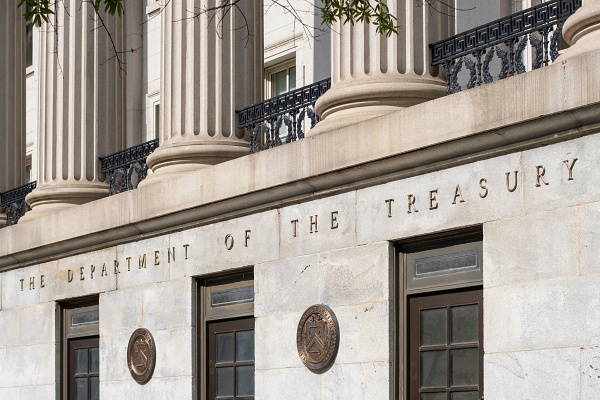
The U.S. Treasury has withdrawn two cryptocurrency surveillance proposals that had been pending for a long time.
Bitcoin Magazine, a blockchain media outlet, reported on Oct. 6 that the Treasury Department's Financial Crimes Enforcement Network (FinCEN) filed notices withdrawing a 2020 proposal on noncustodial wallets and a 2023 plan to designate foreign cryptocurrency mixing as a transaction of primary money-laundering concern.
The move is being seen by privacy advocacy groups and the digital asset industry as easing regulatory burdens. The two withdrawn items were especially controversial because they could have imposed sweeping reporting requirements on personal wallet users and financial institutions.
The 2020 proposal would have required banks and financial institutions to report certain transactions of $3,000 or more or $10,000 or more if customers stored cryptocurrency in noncustodial wallets. It effectively sought to make transactions involving wallets directly controlled by individuals subject to financial institution reporting.
The 2023 proposal cast a wider net. It defined mixing as conduct that obscures a transaction's origin, destination and amount, and included pooled funds, split transfers, disposable wallets and cross-asset swaps. If implemented, financial institutions would have had to submit wallet addresses, transaction hashes, IP addresses and customer identity information to authorities.
Coin Center called the decision a "major victory for financial privacy." It said the definition of mixing was so broad that it covered common techniques used by ordinary cryptocurrency users to protect privacy. It has also argued that because it is difficult to determine where a mixing transaction took place, risk-averse financial institutions could end up reporting even purely domestic transactions, creating collateral damage such as account restrictions or closures for innocent users.
Authorities also partly acknowledged those concerns during the review of the proposals. FinCEN said comments during the consultation process noted that the definition could "chill lawful activity" and raised worries it could impose excessive paperwork burdens on financial institutions.
The withdrawal also aligns with the White House's policy stance. A July 2025 report by the President's Working Group on Digital Asset Markets said the administration supports the ability of lawful users to transact privately on public blockchains, and recommended that the Treasury review the rules again. While acknowledging that criminals use mixers for money laundering, the report also said lawful users use them for financial privacy.
FinCEN did not give mixing services a free pass. It said illicit actors are still using mixers and other means to obstruct investigations by law enforcement. It added it will continue to monitor potential money laundering and terrorist financing and could take action again in the future.
The decision is therefore being read as a move by the United States to recalibrate the balance between cryptocurrency privacy and surveillance. While the proposals were withdrawn, debate over oversight related to mixing and noncustodial wallets is expected to remain a central issue in U.S. regulatory discussions.
 Jinju Hong (홍진주)
hongjj@d-today.co.kr
Jinju Hong (홍진주)
hongjj@d-today.co.kr