
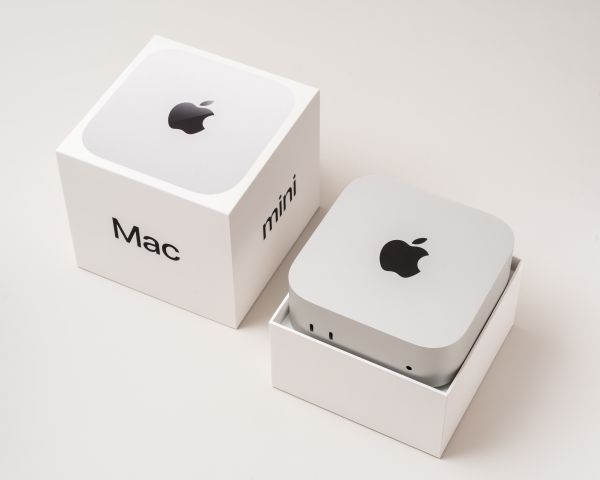
[DigitalToday reporter Jinju Hong] The Mac mini sells at a much lower price than the MacBook largely because it omits the display, battery and input devices and is designed for desktop use.
On Oct. 4, IT media outlet Engadget said the Mac mini’s price competitiveness comes from differences in components and design, going beyond a simple product distinction.
According to the outlet, the Mac mini comes with Apple’s M6 processor at $900 (about 1.2 million won), offering a setup that can be more than needed in typical use. It said everyday apps such as Safari and VLC are unlikely to hit performance limits, with differences standing out mainly in high-load tasks such as large-scale editing or gaming. It added that the base storage is limited to 256GB, meaning users who sync photo and video libraries could run short on space.
The biggest factor behind the price gap was the screen, it said. The Mac mini has no display and also lacks a built-in camera. For the MacBook laptop, related parts such as the frame, hinges and cables must be included as well as the panel itself. The Mac mini lowers its launch price by removing that setup.
The omission of input devices was also cited as a reason for the lower price. The Mac mini has more ports than the NEO or the MacBook Air, but it does not come with a keyboard, mouse or trackpad. That can be an advantage for users who already have peripherals, but it could increase actual spending for first-time Mac buyers.
The presence or absence of a battery also makes a difference. The Mac mini only needs a power supply, while the MacBook must include a lithium-ion battery. It said laptops must be made thin and light while also withstanding shocks and meeting power-efficiency requirements, which can only push design costs higher. It added that desktop-friendly cooling designs, such as the Mac mini’s large circular ventilation structure on the bottom, are difficult to apply to laptops.
The criteria for choosing between them depend on the user’s environment. For users entering the Mac ecosystem for the first time, the MacBook Air was assessed as offering better value because it includes a screen, keyboard and trackpad and can be used anywhere. By contrast, it said the Mac mini is a better fit for users who already have monitors and desktop peripherals or plan to connect it to a TV. In particular, it said the Mac mini offers 2 USB-C ports and 3 Thunderbolt ports, with expandability cited as a strength in desktop setups. The MacBook may need a dock to connect many accessories.
Price competitiveness changes as configurations move upmarket. The Mac mini does not allow free part swaps like a Windows 11 PC, but it offers a wide range of choices at the initial configuration stage. Its top-spec model can rise to $6,800 (about 9.13 million won) with an M5 Pro, 64GB of RAM, 8TB of storage and 10Gbps Ethernet. Lowering storage to 512GB brings it down to around $3,000 (about 4.03 million won), but at that price level it said the Mac Studio, starting at $2,500 (about 3.35 million won) with an M5 Max chip and 36GB of RAM, also becomes a comparison target.
Ultimately, it said the Mac mini’s strength lies less in its low starting price itself than in users who can take advantage of an existing desktop setup. For consumers who need to buy a monitor and input devices, upfront costs can increase, making the MacBook Air a more realistic option because it offers portability and a basic package together.
 Jinju Hong
hongjj@d-today.co.kr
Jinju Hong
hongjj@d-today.co.kr