
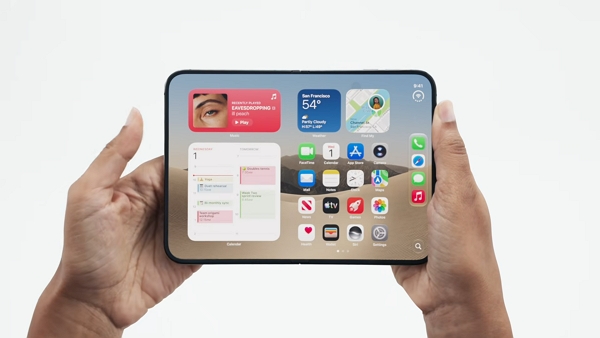
[Digital Today reporter Jinju Hong] Apple has applied a replaceable protective layer to the folding display of its foldable phone, the iPhone Duo. The design aims to reduce the problem of creases becoming more noticeable over time in a folding-screen structure.
NineToFiveMac reported on Oct. 1 that Apple calls the part a “cover layer” and is focused on keeping the screen in first-day condition even after long-term use.
The details were fleshed out through interviews with Apple executives that followed last month’s unveiling of the iPhone Duo. Kate Bergeron (케이트 버저론), Apple’s vice president of hardware engineering, explained in a TikTok interview that the iPhone Duo was designed to improve durability and reduce the crease issue repeatedly pointed out in other foldable devices. She said the cover layer of the folding display is replaceable.
Apple appears to be addressing display durability and crease issues long seen as weaknesses in foldable devices through hardware design and after-sales service. The outlet reported that Apple took a highly deliberate approach to maximizing durability and minimizing creases during development of the iPhone Duo. Making the cover layer separately replaceable is part of that direction.
Some costs were also confirmed. Apple included iPhone Duo cover-layer replacement in its estimated AppleCare service costs. According to details checked by Quinn Nelson, the cover-layer replacement costs $19 for AppleCare subscribers. The cost has not yet been disclosed for cases without coverage.
The move targets a key factor that can make buyers hesitate over expensive foldable phones. NineToFiveMac noted that Apple has effectively offered a solution to concerns that creases could become more pronounced over time after buying the iPhone Duo, which costs more than $2,000. If only the surface protective layer can be serviced instead of replacing the entire screen, it could reduce the repair burden.
It also stands out that Apple specified the “cover layer” as an official service item. This is read as meaning Apple partly assumes the possibility of wear on foldable screens and will manage it within its customer service system. It is meaningful in that Apple has begun to treat creases and durability, the most sensitive elements in foldable product lines, as maintenance issues that extend beyond product sales.
The iPhone Duo has drawn attention since its unveiling last month over what points of differentiation Apple will put forward in the foldable market. The message confirmed so far is clear. Apple is not simply releasing a device with a folding screen, but is focusing its design capability on how well it can maintain appearance and user experience over time. The cover-layer replacement policy is the most direct example of that strategy.
 Jinju Hong
hongjj@d-today.co.kr
Jinju Hong
hongjj@d-today.co.kr