
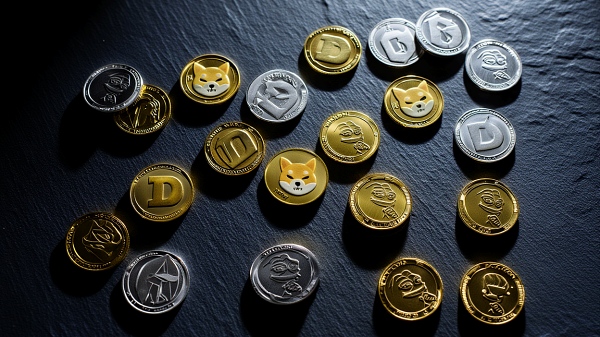
California has finalised legislation banning state and local government officials from issuing memecoins.
On Sept. 27 local time, blockchain outlet U.Today reported that California Governor Gavin Newsom signed a bill to block the issuance of politician-linked tokens.
The core of the law is to prevent California public officials from issuing memecoins going forward. It applies broadly to elected and appointed officials at the state and local level, as well as state lawmakers and members of government-affiliated commissions, panels and advisory bodies. Bodies with only advisory authority are not exempt.
The bill also sets a broad definition of memecoin. It is designed to cover digital assets linked to internet memes, public figures, celebrities, virtual characters, current issues and online humour. It does not ban existing memecoins in general, such as Dogecoin. The prohibition targets issuance and distribution of memecoins tied to public officials.
It also includes distribution restrictions. Digital asset service providers cannot offer to California residents official-linked memecoins issued after Jan. 1, 2027. The structure goes beyond a ban on issuance by officials and blocks in-state sales channels for related tokens.
The California legislature saw financial instruments issued or promoted by public officials as potentially creating conflicts of interest. It judged that such a structure could increase pay-to-play trading opportunities and the risk of foreign influence. It also cited that blockchain wallets can be controlled in a near-anonymous manner, widening the scope for corruption, as part of the rationale for pursuing the bill.
Lawmakers also viewed the ease of creating memecoins as a problem. They judged that, combined with highly anonymous cryptocurrency trading, it could widen pathways for foreign actors or special interest groups to get involved. The concern reflected is that when a public office and token issuance are combined, gaps in oversight around money flows could grow.
The bill put more weight on civil enforcement than criminal punishment. The California attorney general can seek an injunction to halt violations and can also ask a court to order the return of funds suspected of being improperly obtained. Local prosecutors, city legal officers and county counsel can also respond to violations of the ban on memecoin issuance by public officials and public employees.
The legislative process proceeded without major disagreement. The bill passed the California Senate 40-0 and the Assembly 78-0 before moving to the governor's signature. This shows California politicians are treating official-linked digital assets not as a simple fad product but as an issue of public ethics and the influence of money.
Attention now focuses on how the sales limits on service providers after Jan. 1, 2027 will be enforced in practice. With the scope of official-linked tokens and the criteria for determining memecoins set broadly, digital asset distribution businesses in California are likely to have to tighten their listing and provision standards.
 Jinju Hong (홍진주)
hongjj@d-today.co.kr
Jinju Hong (홍진주)
hongjj@d-today.co.kr