
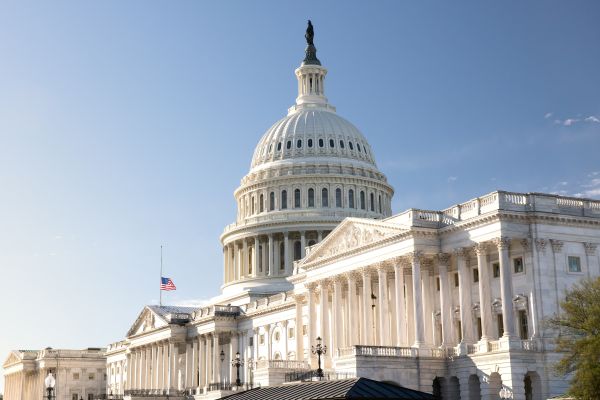
The U.S. House Ways and Means Committee passed a bill to overhaul the digital asset tax system and sent it to the full House.
On Sept. 16, blockchain outlet Decrypt and others reported that the committee passed the Digital Asset Tax Certainty Act (H.R. 10357) by 38 votes to 5. The bill includes provisions to revise tax standards for cryptocurrency transaction fees, stablecoins, mining, staking and digital asset lending.
With the bill moving to the floor, it will next undergo review in the House and Senate. To become law, both chambers must pass identical legislation and it must be signed by the president.
The core aim is to reduce the burden of calculating taxes related to digital asset transactions and to specify tax standards. The bill would exempt qualifying network or transaction fees of $10 or less from gain or loss calculations even if paid in tokens, if certain conditions are met. Digital assets are currently treated as property, meaning paying fees in tokens may require calculating taxable gains or losses. The provision would apply from 2028 and is limited to qualifying fee payments, not to small cryptocurrency purchases of $10 or less in general.
It would also simplify tax calculations for qualifying dollar-pegged stablecoins. The bill would streamline tax treatment for stablecoins that trade near their redemption value and would classify mining and staking rewards as ordinary income. A proposal to defer the tax recognition timing for some mining and staking rewards was removed from the final version.
Rules for investors would also change. The bill would extend wash-sale rules to traded digital assets, requiring investors to defer loss deductions if they reacquire a substantially identical asset within 30 days before or after selling it. Qualifying cryptocurrency lending would not be treated as a sale. The bill also includes a voluntary disclosure program related to digital assets to allow qualifying taxpayers to amend past tax filings.
It also includes provisions to apply certain safe harbors under existing tax law to digital assets and to allow digital asset dealers and traders to use mark-to-market accounting, aligning parts of the tax framework with that for traditional financial assets.
Jason Smith (제이슨 스미스), chairman of the House Ways and Means Committee, said the bill was the result of more than a year of bipartisan discussions and cooperation. Smith said the bill aims to reduce tax uncertainty for digital assets and taxpayers' burdens while improving tax fairness with traditional financial assets.
Progress on the tax bill came just after a separate bill addressing market regulation, the Clarity Act, failed to advance in the Senate. On Sept. 15, the Senate voted 49-50 on a motion to begin floor consideration of the Clarity Act, and it did not advance. The bill would establish a federal regulatory framework for the digital asset market and define the roles of the Securities and Exchange Commission and the Commodity Futures Trading Commission.
After the Clarity Act stalled in the Senate, the SEC and the CFTC said they would pursue cryptocurrency regulation using their existing authority regardless of whether Congress passes legislation.
As a result, U.S. digital asset legislation is moving forward along two tracks: market regulation and taxation. The tax bill has cleared a committee hurdle, but votes in the full House and the Senate, as well as the president's signature, are still required before it can take effect, making the legislative process ahead a key factor.
 Seungah Yoo
ysah@d-today.co.kr
Seungah Yoo
ysah@d-today.co.kr