
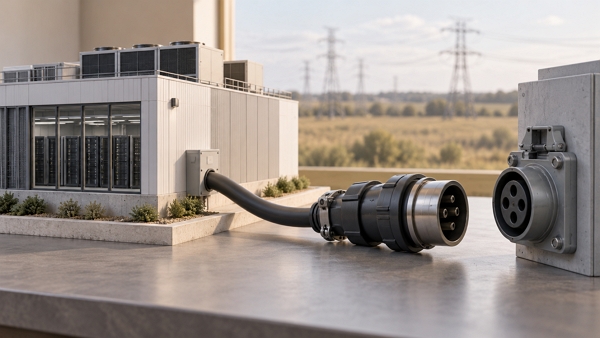
As AI data center construction surges in the United States, power supply is emerging as the biggest obstacle to new projects. Data centers are being built quickly, but power plants and transmission networks are not expanding as fast, creating a situation that requires massive additional investment.
Tech outlet TechRadar reported on Sept. 16 that Moody’s, an international credit rating agency, estimated that about $110 billion would need to be invested in new power generation facilities to meet U.S. data center electricity demand. Annual power consumption by U.S. data centers is projected to reach 426 terawatt-hours (TWh) by 2030.
The problem is the pace of building power infrastructure. Data centers can be developed in a relatively short period, but power plants and transmission networks are being delayed by permitting, equipment procurement and supply chain problems. Some power projects were found to be delayed by as much as 7 years.
Moody’s pointed out that expanding generation facilities alone makes it difficult to resolve power shortages. It said investment in transmission networks must also proceed in parallel to supply electricity to areas where data centers are concentrated. Expanding transmission networks could also help supply cheaper power produced in outside regions to rural areas.
As the burden of power supply and demand increases, some regions have temporarily halted new data center projects to review related regulations. Canada’s Saskatchewan province introduced a policy requiring large-scale data center operators to provide their own power supply.
The burden of electricity bills is also an issue. U.S. President Donald Trump is pushing a "payers protection pledge" to prevent power costs arising from data center expansion from being passed on to ordinary consumers.
Moody’s stressed that data center operators must also actively participate in expanding the power grid to complete facilities on schedule. The core of competition in AI infrastructure is expanding beyond securing semiconductors and servers to the ability to ensure stable power supply.
 Jaewon Choi
ittt_0801@d-today.co.kr
Jaewon Choi
ittt_0801@d-today.co.kr