
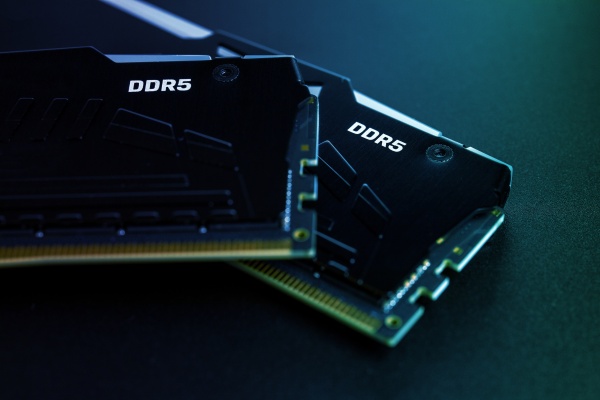
[Digital Today reporter Jinju Hong (홍진주)] DDR5 memory prices have surged more than five times compared with levels before the memory crisis, increasing the price burden in the PC and laptop markets. Prices are rising not only for memory but also for SSDs and graphics processing units (GPUs), putting cost pressure on both manufacturers and consumers.
TechRadar reported on Tuesday that Germany’s retail-market DDR5 price index rose as much as 544 percent compared with July 2025. Tracking about 20 DDR5 products, it found readings of 486 percent in August and 419 percent in June, with the recent uptrend becoming steeper.
Prices are also surging in the United States. A DDR5-5600 32GB product is currently about $409, more than 5.5 times the pre-crisis low of $72. As a result, a 32GB memory configuration, regarded as a de facto standard in gaming PCs, is becoming a significant burden for consumers. Choosing 16GB can save about $200, and an analysis says more consumers may opt for lower capacity instead of high-capacity memory.
Rising memory prices are also affecting prices and specifications of finished products. Dell kept the starting price of the XPS 13 at $699 in the United States, but cut storage on a new entry-level model in the same price range to 256GB from 512GB. A model with 8GB of RAM and 512GB of storage is priced at $799, $100 higher than before.
A model with 16GB of memory and 512GB of storage also rose $100 to $999. Even for models that appear to keep the base price unchanged, the effect is effectively a price increase when judged by the specifications actually available for purchase.
The strain in the PC components market is not limited to memory. With SSD and GPU prices also rising, the overall cost needed to build a PC or upgrade an existing system is increasing. For manufacturers, it is becoming harder to decide how much of component price increases to reflect in product prices.
Dell has not yet announced the price of the 14S laptop it recently unveiled. This is seen as memory supply shortages and higher component costs affecting pricing for new products as well.
The market is focusing on the possibility that the current strength in memory prices will be difficult to resolve in the short term. Some forecasts say the memory price burden could grow further in the second half of 2026, and if the current price trend continues, the PC market in 2027 could also face a difficult environment.
Ultimately, the surge in DDR5 prices is not just about one PC component getting more expensive, but could lead to higher finished-product prices and lower specifications. If memory supply conditions do not stabilise, the burden on consumers looking to buy PCs and laptops is expected to persist for some time.
 Jinju Hong
hongjj@d-today.co.kr
Jinju Hong
hongjj@d-today.co.kr