
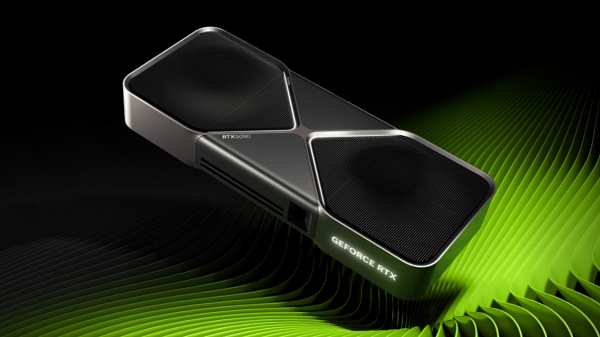
Nvidia's top-end gaming graphics card RTX 5090 is nearing $10,000 in the United States, extending its run of high prices. With inventories at major distribution channels depleted, prices have surged mainly for third-party listings. There is also a view that the next-generation RTX 6000 series could be released as early as next year.
On Sept. 16, U.S. time, IT outlet TechRadar reported that the Asus ROG Astral RTX 5090 is selling for $9,659 on Newegg in the United States. It is a third-party listing rather than Newegg direct, and RTX 5090 stock is hard to find at major retailers.
Prices are higher depending on the product. The ROG Astral "Dhahab Edition" with a gold-plated design is listed at $11,999, while relatively cheaper products are around $6,549. In Britain, the lowest price for the RTX 5090 is about 4,500 pounds, and some ROG Astral models have jumped to 6,600 pounds.
The problem is that next-generation products may not be free of price pressure either. According to a rumour carried by YouTube channel Moore's Law Is Dead, Nvidia is known to be planning to release its next GeForce GPU, the RTX 6000 series, code-named Rubin, in 2027. That is a view that brings the timeline forward by 1 year from an earlier expectation of a 2028 launch.
Specific product lineups and specifications have not yet been confirmed. RTX 6090 and RTX 6080 have been mentioned as early models, and the possibility of hardware changes to run DLSS5 has also been raised. None of it has been officially confirmed.
The biggest variable for the next-generation GPU is price. With the RTX 5090 already trading far above its recommended consumer price, continued GPU demand from the AI industry could keep upward price pressure on gaming products.
Memory prices are also a burden. The industry has been discussing the possibility that the memory pricing environment could worsen next year, and the higher the capacity of video RAM (VRAM) in flagship GPUs, the more they may be affected by rising costs. That has raised the possibility that actual selling prices could be set high even if the RTX 6000 series is launched.
The sharp rise in RTX 5090 prices has become an example showing that beyond a simple temporary shortage, the gaming GPU market's supply and pricing structure are being influenced by AI demand and memory costs. It remains to be seen whether the RTX 6000 series will actually be released next year and, if it is, whether it will be supplied at prices gamers can afford.
 Jinju Hong
hongjj@d-today.co.kr
Jinju Hong
hongjj@d-today.co.kr