
[DigitalToday reporter Choi Jae-won] The biggest reason the commercialisation of electric aircraft is struggling to gain momentum is batteries. Battery weight in the air limits range and payload.
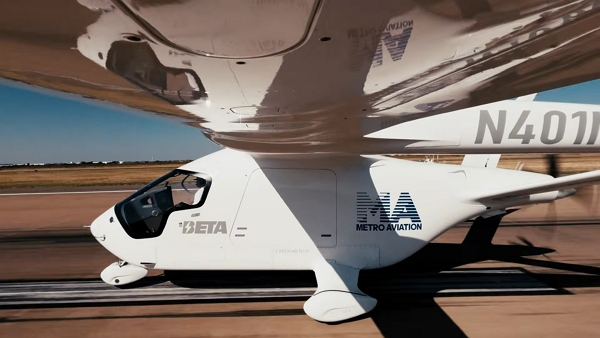
Business Insider on Sept. 15 (local time) boarded Beta Technologies' electric aircraft Alia CX300 to examine the potential and limits of electric aviation. The CX300 is a pure electric aircraft that takes off and lands on a runway, and is among the leading models seeking commercialisation in the United States. A demonstration flight of about 20 minutes used about 35 kWh of power, and it also confirmed gliding performance with the motor completely turned off during flight.
The central challenge for electric aviation is energy density. Jet fuel holds about 50 times more energy per 1 kg than 1 kg of top-tier batteries, the outlet said. Even allowing for electric motors being more efficient than internal combustion engines, the practical gap is about 20-fold. Since the first electric aircraft appeared in 1973, batteries' energy storage per unit of weight has improved 5 to 6 times, but the average annual improvement has been about 3 percent. With current technology, around 9 seats is effectively cited as the size limit for electric aircraft.
Commercialisation is also difficult. More than $20 billion (about 27.3 trillion won) has been invested in the electric aviation industry since 2004, but companies that attracted large-scale funding, including Zunum Aero, Eviation and Germany's Lilium, have faltered in succession. Beyond making the technology work, there are many barriers, including certification, scaling up production and building charging infrastructure. Getting FAA certification for a new aircraft within existing aircraft categories can typically take 5 to 9 years.
Beta's strategy is to open the market starting with medical and cargo transport. It then plans to expand into general passenger transport and vertical takeoff and landing aircraft. The CX300, however, has not yet received type certification from the U.S. Federal Aviation Administration (FAA). Electric aircraft have proven they can actually fly, but to become a means of transport the public uses routinely, they must clear two hurdles: battery technology and regulation.
 Choi Jae-won
ittt_0801@d-today.co.kr
Choi Jae-won
ittt_0801@d-today.co.kr