
About 25 percent of this year’s project funding directly allocated to the Gwangju region among programmes funded by the regional balanced development special account carried out by the National IT Industry Promotion Agency (NIPA) went to Gwangju, data showed. It was the largest amount among the country’s 17 metropolitan cities and provinces.
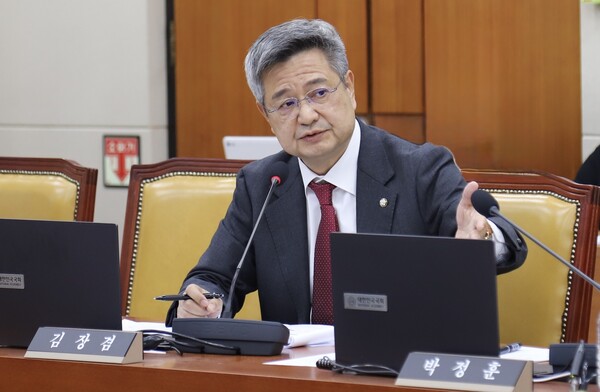
An analysis of the “status of privately commissioned and implemented projects” submitted by NIPA to Kim Jang-gyeom (김장겸), a People Power Party lawmaker on the National Assembly’s Science, ICT, Broadcasting and Communications Committee, showed the 2026 support under the special account totalled 154.015 billion won.
By region, Gwangju received the most at 38.258 billion won. It was followed by Gangwon at 15.072 billion won, Daegu at 12.336 billion won, North Gyeongsang at 11.205 billion won, North Jeolla at 9.658 billion won and Busan at 7.875 billion won.
In particular, Gwangju’s project funding rose to 38.258 billion won this year from 17.155 billion won last year, an increase of 21.103 billion won, or about 123 percent. Over the same period, the overall size of the special account rose to 154.015 billion won from 142.713 billion won, an increase of about 11.3 billion won. The increase for Gwangju exceeded the overall increase because project funding fell in some regions including Daegu, North Chungcheong, South Chungcheong, Daejeon and Sejong.
The rise in Gwangju funding was influenced by the allocation of large AI projects. This year, 18.601 billion won was newly allocated for the “national AI data centre upgrade” project. The project is being carried out by the Artificial Intelligence Industry Convergence Project Group through a policy-designation method.
Support for the Gwangju AI School also rose by 6.3 billion won to 10.3 billion won this year from 4 billion won last year. Combined, the two projects total 28.901 billion won this year, accounting for about 75.5 percent of Gwangju’s total project funding.
However, the lawmaker’s office said the high share for Gwangju reflected a structure in which regional project sizes vary sharply depending on whether large AI infrastructure projects are allocated by year, rather than existing projects being repeatedly increased every year.
Kim said, “The regional balanced development special account is not something to be assessed solely through simple amount comparisons, as the scale of support by region can vary depending on a project’s purpose and nature.” He added, “As it is a budget with a regional balance purpose, there is a need to consider balance along with project performance.”
 Jin-ho Lee
jhlee26@d-today.co.kr
Jin-ho Lee
jhlee26@d-today.co.kr