
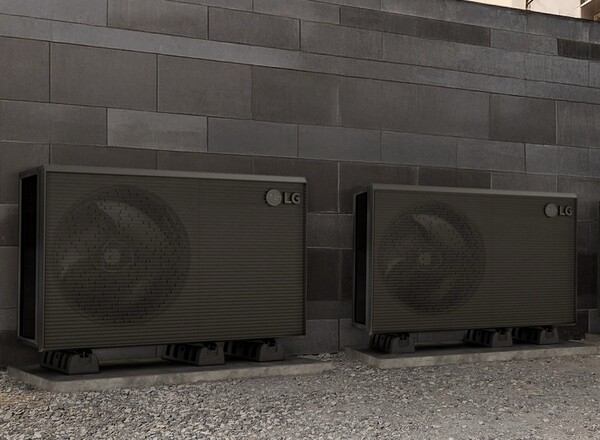
Apartment heating systems centred on gas piping are being put to the test as they shift to electrification. LG Electronics said on Tuesday it signed a memorandum of understanding at the Jeju International Convention Center with Jeju Special Self-Governing Province, Jeju Development Corp and the Korea Institute of Industrial Technology to 추진 a demonstration project on electrifying cooling and heating in multi-family housing and P2H (Power to Heat).
The demonstration of installing heat pumps at an apartment complex where residents are living is a first in South Korea. The site is the Shinhyo Apartment complex in Hyodon-dong, Seogwipo, a 1 basement-level and 7 above-ground floor building with 12 households. The project will complete design by October, begin construction and enter operational testing after completion in December. LG Electronics will be responsible for system design, product supply, trial operation and maintenance, and performance evaluation. Jeju Province will handle regulatory improvements and policy linkages, Jeju Development Corp will provide and operate the building, and the Korea Institute of Industrial Technology will take charge of P2H design and data analysis.
The model combines a household heat pump cooling and heating system with a central hot-water P2H system. The heat pump installed in each household uses 1 outdoor unit to handle both direct cooling and underfloor heating. It allows household-level control of cooling and heating while reducing the burden of securing space for outdoor unit installation.
Instead of placing a hot-water tank in each household, the plan also applies a method that installs an air-source heat pump and a large-capacity hot-water tank in unused space in the first-floor pilotis area to supply hot water to each household in a single system. The structure runs the heat pump using surplus electricity produced by renewable energy such as solar power, stores the heat and then uses it for hot water supply. The company said this could help stabilise the power grid and reduce residents' energy costs.
LG Electronics has built up related technology since entering the heat pump business in 2008, including moving into the domestic system boiler business in 2011 and supplying South Korea's first integrated residential heat pump boiler in 2018. In the "2026 Jeju Heat Pump Deployment in Daily Life" programme 추진 by the government and Jeju Province, it won the largest number of households out of total volumes in the first and second halves and was selected as the top operator.
Operating data secured from the demonstration will be used to expand to public rental housing, remodeling of existing buildings and newly built complexes. Based on this, LG Electronics plans to build a "Korean-style multi-family housing electrification standard model" and expand deployment from single-family homes to multi-family housing overall. The company said it also operates heat pump research centres in places including Alaska in the United States, Oslo in Norway and Harbin in China to develop cold-region technology, and continues cooperation with universities and institutions in each country.
Se-gi Oh (오세기), head of LG Electronics' ES Research Center and a vice president, said the demonstration targeting an apartment where residents are living has significant meaning in that it verifies an electrification model for heat pump cooling, heating and hot water optimised for multi-family housing characteristics. He said the company will lead the shift to decarbonised electrification in South Korea's residential environment based on its unrivalled heat pump technology proven in global markets.
 Dae-geon Seok
d2dg@d-today.co.kr
Dae-geon Seok
d2dg@d-today.co.kr