
[DigitalToday reporter Jinju Hong (홍진주)] Competition in the electric vehicle industry is heating up again around long-range driving, ultra-fast charging and advanced autonomous driving. Volkswagen unveiled an EV concept built around a 1,000-mile range, and BYD introduced a heavy electric truck that supports 1.5-megawatt ultra-fast charging. Tesla is also drawing attention by again setting a schedule to unveil the Roadster.
Electrek, an electric-vehicle media outlet, reported on Sept. 14 (local time) that Volkswagen highlighted a long-range EV concept in its “Mission Efficiency,” continuing the XL1 lineage. It targets a range of up to 1,000 miles, about 1,600 km. Rather than simply increasing battery capacity, it focuses on maximising vehicle efficiency.
This shows that the EV industry’s range race is expanding from bigger batteries to efficiency-focused design. As blindly increasing battery capacity raises vehicle weight and price, technology that reduces power consumption itself is emerging as a new pillar of competition for long-range EVs.
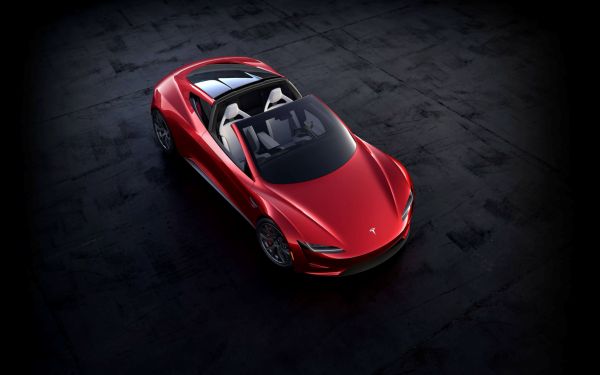
Tesla again presented plans to unveil the Roadster. Elon Musk has delayed the timing several times, but Tesla said it would reveal it on Oct. 1 and issued a message saying, “Prepare to launch.” Market attention is focused on whether the unveiling will actually take place and how specifically Tesla will disclose the high-performance flying function that has been discussed.
Tesla’s autonomous driving service also showed challenges. The outlet reported that the Cybercab had instances in Austin of taking detours that were far longer than actual travel time, and that issues related to accident rates were raised in robotaxi operating data. It is a point that there is still a gap between demonstrations of autonomous driving technology and real-road operating performance.
At Zurich Airport, by contrast, a case emerged of operating Level 4 autonomous driving shuttles without human monitoring. It shows a different commercialisation path from robotaxis that run on public roads, by first expanding autonomous driving services in controlled spaces such as airports.
In the commercial EV market, BYD’s ultra-fast charging technology drew attention. BYD unveiled an electric semi-truck with a range of about 600 km and said it supports 1.5-megawatt “flash charging.” Charging speed is emerging as a key competitive edge not only in passenger cars but also in large commercial vehicles.
In long-distance transport in particular, charging time is directly tied to operating efficiency and profitability. If ultra-high-power charging technology is applied in actual logistics operations, it could help increase operating time for electric trucks and reduce downtime caused by charging.
Ultimately, the axes of competition in the EV market are becoming more segmented into range, charging speed and autonomous driving. Volkswagen is focusing on long-range driving built on efficiency, while BYD is concentrating on competitiveness in commercial vehicles through ultra-fast charging. Tesla is emphasising technological symbolism through the Roadster and robotaxis, but it also faces challenges including schedule delays and verification of real-world autonomous driving performance.
Industry attention is focused on whether Tesla will actually unveil the Roadster on Oct. 1, what form Volkswagen’s 1,000-mile EV concept will take as it becomes more concrete, and whether BYD’s 1.5-megawatt charging truck will prove competitive in real transport operations.
 Jinju Hong
hongjj@d-today.co.kr
Jinju Hong
hongjj@d-today.co.kr