
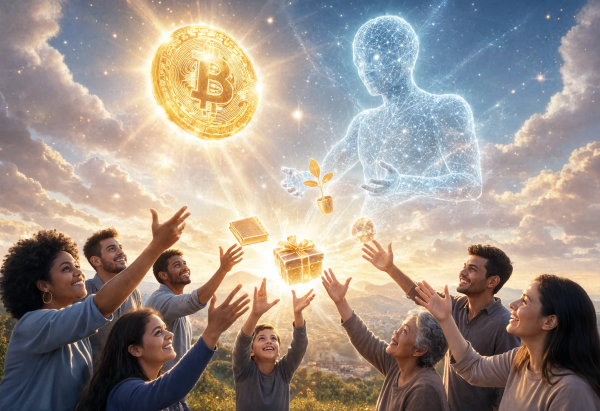
[DigitalToday reporter Jinju Hong] Jack Mallers (잭 말러스), CEO of Strike, argued that bitcoin (BTC) and artificial intelligence (AI) could be tools to give humans their time back. He said the aim should be to reduce inefficient monetary systems and repetitive labour so people can spend more time on creative activities.
Bitcoin Magazine said on Sunday that Mallers appeared on a Bitcoin Magazine TV programme and said bitcoin and AI can reduce inefficiency and repetitive labour created by a bad monetary system.
Mallers defined money as an abstraction of human time and energy. He stressed that because money is a market good that represents individual effort and labour, the quality of a currency directly affects a person's life. He pointed out that the more unstable a currency's value is, the more the structure forces individuals to put in longer hours and more labour. That means more labour is needed to buy a home, take a vacation or pursue artistic interests, he said.
He argued that, by contrast, a sound monetary system can properly compensate the value of time and energy that people put in and give individuals time back. Mallers said bitcoin and AI could play a role in reducing that structural burden.
As an example, he cited the Wright brothers, American inventors. He argued that stable money can provide a foundation for creative activity, noting that the Wright brothers invented the airplane when the United States maintained the gold standard.
Mallers' remarks came alongside a recent upswing in bitcoin. Bitcoin rose about 25 percent in August, posting its strongest monthly gain so far in 2026, and ended August higher for the first time since 2021. By late August, bitcoin was trading at about $78,000.
In the market, an expanded U.S. Treasury buyback of long-term bonds was cited as one factor behind bitcoin's rise. After Treasury Secretary Scott Bessent's decision to expand long-term bond buybacks, Treasury yields fell, and short positions worth billions of dollars were liquidated in the process. Interest in assets that respond to currency depreciation, such as gold and bitcoin, then picked up again.
Dollar weakness also influenced the move. Around the time of the Treasury's buyback announcement, news was reported that U.S. national debt had reached $40 trillion, sending the dollar lower. Mallers also expressed strong concern about the U.S. fiscal situation. He said the current level of national debt was not sustainable and argued it would be difficult to solve the fundamental problem whether rates are raised or cut. Both could fuel inflation and would not be sustainable, he said.
Inflation pressure also remains a market variable. The U.S. August core consumer price index (CPI) released on Sept. 12 rose 0.3 percent from the previous month, above market expectations. Core prices excluding food and energy rose more strongly than expected, and were interpreted as a signal that inflation pressure is still continuing.
In this macroeconomic environment, bitcoin is again being watched as an asset that responds to currency depreciation, beyond being simply a risk asset. As U.S. fiscal burdens, a weaker dollar and inflation worries are highlighted at the same time, views are also gaining strength that bitcoin can be seen as a kind of store of value.
Mallers' argument is drawing attention in that he explained the role of bitcoin and AI from the perspective of human time rather than grouping them as simple technological optimism. His logic is that if bad money makes people consume more time and energy, sound money and automation technology can reduce unnecessary labour and return that time to creative activity.
Ultimately, the message Mallers delivered is not limited to bitcoin's price outlook. He argues that people should rethink how money and technology affect human labour and time. With bitcoin prices recently moving alongside macroeconomic variables such as expanding U.S. debt, a weaker dollar and inflation worries, the market is expected to continue watching the link between monetary policy and bitcoin.
 Jinju Hong
hongjj@d-today.co.kr
Jinju Hong
hongjj@d-today.co.kr