
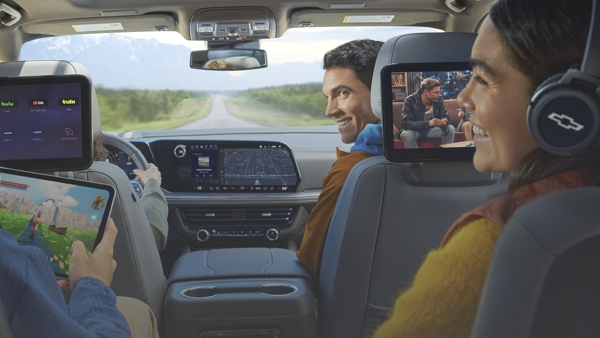
In the United States, a privacy debate is growing over who should control location and driving-habit data collected by cars. As it emerged that vehicle data was used to calculate insurance premiums, concerns about car surveillance, similar to smartphones, are coming into focus.
On Sept. 13, The Verge reported that the U.S. Federal Trade Commission (FTC) confirmed a final order in January against General Motors (GM) and OnStar. It barred them for the next 5 years from providing consumers' location and driving-behavior data to consumer reporting agencies. The action followed the FTC's objection that GM collected and sold data without adequate notice and explicit consent.
According to the FTC investigation, OnStar Smart Driver collected information such as hard acceleration and braking, speeds above 80 miles per hour (about 128 km per hour), nighttime driving and seatbelt use. The data was passed to LexisNexis and Verisk and used to compile consumer reports. Some drivers said they learned their data had been shared only after they were denied insurance coverage or received notices of higher premiums.
Under the FTC order, GM must obtain explicit consent before collecting, using or sharing connected-vehicle data for the next 20 years, with certain exceptions. It must provide ways for consumers to request copies of their data or ask for deletion, and in vehicles where it is technically possible, it must allow precise location collection to be turned off.
The issue is not limited to GM. The Mozilla Foundation gave failing grades on privacy protection to all 25 major car brands it surveyed in 2023. It cited the potential for extensive personal data collection through vehicle sensors, cameras and microphones, as well as smartphone apps and websites. Consumer Reports also pointed out last year that most major U.S. automakers share driving-behavior data with other companies.
Political responses have also begun. The DRIVER Act, introduced in December last year, would give vehicle owners real-time access to and joint control of data generated by their vehicles. It would also allow them to refuse the sale of location, biometric and driving-behavior data. Privacy advocates have criticised it for relying on an opt-out approach without banning sales.
Transportation Secretary Sean Duffy (숀 더피) also presented in July to Congress a so-called "Freedom Car" plan to guarantee the right to choose vehicles without automated driving functions or wireless data transmission functions. The plan is not yet a legislated policy and is a proposal asking Congress to review it.
As cars increasingly become computers on wheels, who collects driving data, where it is sold and how much control consumers have is emerging as a new regulatory issue for the auto industry, alongside vehicle performance.
 Choi Jae-won
ittt_0801@d-today.co.kr
Choi Jae-won
ittt_0801@d-today.co.kr