
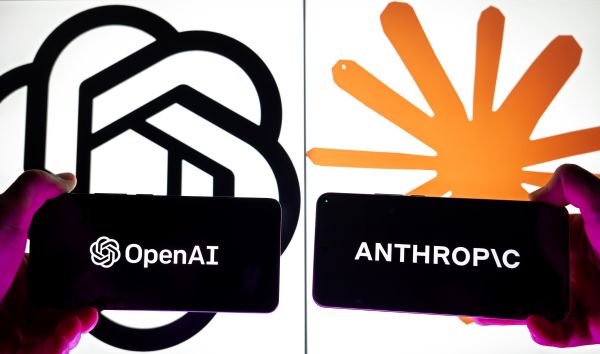
David Sacks (데이비드 색스), co-chair of the U.S. President’s Council of Advisors on Science and Technology (PCAST), criticised Anthropic and OpenAI’s argument for regulating the pace of artificial intelligence development. He argued they should not set conditions such as needing a regulatory framework in order to slow down.
On Sept. 14 (local time), IT outlet IT Media reported that Sacks wrote on X on Sept. 12 in response to an essay by Anthropic CEO Dario Amodei (다리오 아모데이) and a post by OpenAI CEO Sam Altman (샘 알트먼) that agreed with it.
Sacks said Anthropic and OpenAI are already frontier AI. He said the two companies have an oligopoly over frontier AI by reasonable standards such as market share, revenue growth and model performance, and that the companies have argued the gap is widening further through recursive self-improvement (RSI). He added that if an undisclosed model is truly dangerous enough to warrant considering a slowdown, he could support a responsible decision by the two companies to slow down.
He said the problem is the way the slowdown argument is linked to demands for regulation. Sacks criticised the idea that they should act as if they need someone else’s permission, and said they should not claim that outside approval is required to slow down or that new regulatory mechanisms must be put in place first.
Sacks singled out five issues. He cited acting as if permission from others is required; arguing that antitrust laws should be suspended to form a cartel; demanding a regulatory approval process that comes before product liability; treating METR, which he said is intertwined with Anthropic investors and employees, as if it were an independent organisation; and arguing that the same evaluators should monitor even competitors that are not frontier AI.
He also criticised portraying the motivation for slowing down as pure altruism. Sacks said the two companies could face large product liability if their products are used for serious cyber attacks. He also argued the market is already penalising models that behave unpredictably or in ways that are not permitted. After the Hugging Face case, he said, it could be commercially advantageous for the two companies to trade off some performance for reliability and predictability.
Sacks said the discussion over regulating the pace itself could broaden debate over AI regulation. He said it could enable a more intellectual discussion than the total halt advocated by U.S. Senator Bernie Sanders (버니 샌더스). He added that the possibility of China joining a global agreement is very low.
He also argued that setting the criteria for frontier AI would ultimately be led by Anthropic and OpenAI. He said the easiest way not to build superintelligence is for the two companies to agree not to build it, and that demanding a regulatory framework for this could look like blackmailing the public and the political system. He said they need to act voluntarily first to earn trust needed for future regulatory discussions, otherwise it could be seen as regulatory capture or public-opinion campaigning during election season.
Sacks is from South Africa and served as PayPal’s first chief operating officer. He later founded Yammer and sold it to Microsoft, and co-founded Craft Ventures in 2017. In the Trump administration in 2025, he served as the White House’s special adviser for AI and cryptocurrency, but stepped down from that role in March 2026 after reaching the cap on working days for a special government employee. He is now serving as co-chair of PCAST under the White House Office of Science and Technology Policy.
 Seung-a Yoo
ysah@d-today.co.kr
Seung-a Yoo
ysah@d-today.co.kr