
Elice Group is betting on a "Korean-style neocloud" business with modular AI data centres. Rather than competing head-on in scale with global players deploying large amounts of capital, it plans to secure price competitiveness by improving construction costs and GPU utilisation. It also aims to expand its market by supplying AI computing resources produced in South Korea to overseas customers.
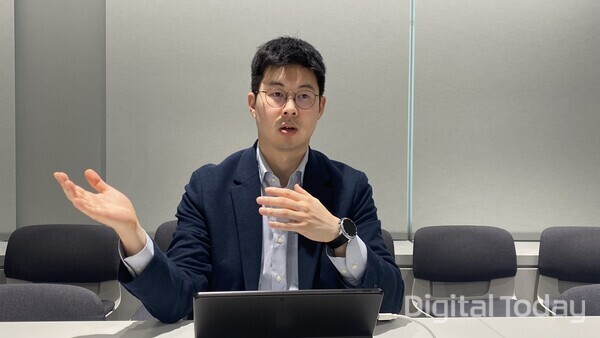
Kim Jae-won (김재원), CEO of Elice Group, recently met with a reporter and said, "Compared with global neoclouds, we are behind in scale, but what Korea can do well is ultimately value for money." He said competitiveness will be determined by how efficiently a company builds and how quickly it operates to recoup investment.
Elice's core offering is modular AI data centres. Unlike converting existing building-type data centres for AI use or building large facilities at once, it quickly installs only the needed number of modules in areas with secured power. The structure reduces construction costs and shortens build times.
Kim explained that while global neoclouds such as CoreWeave rapidly captured the market by reinforcing existing building-type data centres for AI, Elice can build a modular data-centre value chain in South Korea and construct at far lower cost than building-type centres.
He said what neoclouds ultimately provide is the same compute, or AI computation. Competitiveness, he said, comes down to converting power into computation in the cheapest and most efficient way, and Elice is creating value for money through modular centres.
Elice cites efficient construction costs, high GPU utilisation and fast investment payback as three core strengths of its AI infrastructure business. It operates committed and on-demand offerings, as well as spot instances that supply discounted excess GPU resources. The approach reduces idle resources and lifts utilisation.
Kim said the payback period for GPU investments has been about 2.5 years so far. He said new GPU products are released quickly, making it important to build a structure that allows stable recovery of investment and reinvestment in next-generation equipment.
He said GPUs are also lasting longer than expected. Kim said GPU lifespans used to be seen at around 3 years, but are now viewed at 5 to 6 years, and as long as 7 to 8 years. He said even when new GPUs are released, demand continues to emerge for a range of AI models optimised for existing GPUs.
Elice is currently operating a 10 megawatt AI data centre and plans to build an additional 30 megawatt facility within the year. It has also secured power reception capacity of more than 80 megawatts and plans further buildout in line with customer demand and financing conditions. Kim said he believes modular methods can secure sufficient business viability up to below 100 megawatts.
Kim is accelerating investment in AI infrastructure partly out of concern that South Korea could fall behind in the global race to secure AI computing resources. He said the goal is not just to consume power, but to convert it into AI computation through GPUs and cloud services to create higher added value from the same power.
He said, "The highest value-added industry that can be created from power is ultimately compute that produces AI intelligence." He said that just as the country built power grids and laid ultra-fast communications networks, AI computing infrastructure will inevitably become a foundational asset for the next industry.
He said memory and GPU companies currently capture the highest profitability in the AI infrastructure value chain, but opportunities are likely to expand for cloud providers. Kim likened the profitability of memory makers to being "at the level of oil-producing countries" and said GPU makers also secure high margins. He added that cloud operators typically target margins of 20 to 30 percent at this stage, when large-scale investment is under way.
He said semiconductor companies' surge is prominent now, but cloud services will provide compute on top of that, and models will create several times more added value on top of the cloud. He said he expects it to reach a stage where productivity created by AI and productivity created by people are compared.
Elice also sees "compute exports" that supply AI computation secured in South Korea to overseas customers as a key opportunity for a Korean-style neocloud.
Kim said exports do not have to mean selling physical products abroad as in the past. He said if overseas customers remotely access and use virtual computing resources created in South Korea, that itself is an export. He said the company plans to expand beyond domestic compute supply to building modular or building-type AI data centres directly overseas in the future.
He said overseas institutional investors showed strong interest in South Korea's AI infrastructure at an investment roadshow that recently visited Japan, Hong Kong and Singapore.
Kim said overseas investors were already deploying capital aggressively into compute, so they understood the structure of AI infrastructure businesses very quickly. He said they understood Elice's strengths faster and more sharply than investors in South Korea did.
He pointed to a strong tendency in South Korea to view AI infrastructure from a real estate asset perspective rather than as technology investment. He said South Korea should not remain in a role of simply providing land and power, as seen in the Southeast Asian AI data-centre market where Singapore capital and Chinese technology combine with local power and land.
Kim said technology and capital are ultimately the key components of an AI data centre, but domestic capital tends to remain focused on tangible assets such as real estate. He said South Korea must not remain in a role of providing only land and power like Malaysia or Indonesia. He stressed that capital should go into cloud technology that can compete with China or the United States.
He also said South Korea has a high chance of becoming an alternative in Asia's AI data-centre market. He said Japan faces heavy burdens in building data centres due to earthquakes and high power costs, while Singapore and some parts of Southeast Asia have constraints on land and GPU supply.
Kim said South Korea can receive stable supplies of the latest GPUs and has stable power and the capacity to carry out construction. He said it is sufficiently competitive in its ability to build AI data centres safely.
He also stressed that demand for AI infrastructure is growing faster in the private sector than through government projects. He said GPU use is expanding across industries including media and entertainment, games, AI character chat, security, medical and healthcare, new drug development and software development.
Kim said AI use is rising quickly at media, entertainment and game production sites, and newly growing services such as character chat also require substantial GPU computation. He said security is also moving toward competition of GPU against GPU and infrastructure against infrastructure, with AI agents attacking and AI agents defending.
Elice started its AI infrastructure business with a cloud for educational hands-on training. As GPU demand grew in AI education courses, it decided the cost of renting GPUs from public cloud providers was excessively high. It built its own GPU cloud, and later expanded into a neocloud business as demand from general corporate customers rose rapidly.
Kim said the company directly developed cost-effective data-centre and cloud technologies to build a training cloud for education, and in that process gained global-level price competitiveness. He said demand for directly using its cloud is now growing faster than demand for education use.
He added that the company's mission is to make AI widely beneficial. He said it will grow into a company that provides AI infrastructure at costs that anyone can access and links education, AI models and AI transformation solutions.
 Seulgi Son
sageson@d-today.co.kr
Seulgi Son
sageson@d-today.co.kr