
[DigitalToday intern reporter Seung-a Yoo] The U.S. Treasury has publicly moved to press the Senate to act on the "Clarity bill."
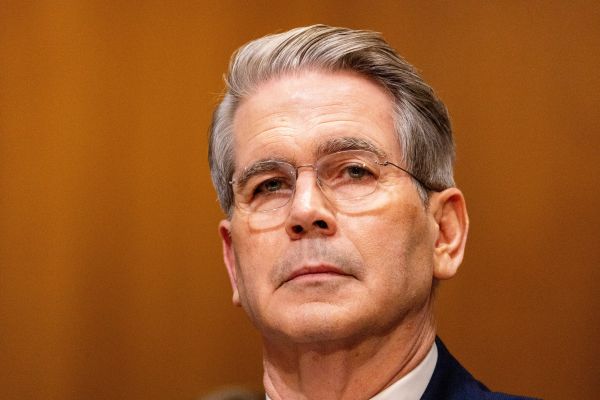
On Sept. 9 (local time), foreign media including blockchain outlet U.Today reported that U.S. Treasury Secretary Scott Bessent (스콧 베선트) urged senators to advance the Clarity bill and warned that U.S. leadership in digital assets could weaken if the bill fails.
In a post on X (formerly Twitter) on the day, Bessent said he strongly urged the Senate, when it returns from its August recess, to keep talks going and agree on procedures to begin consideration so the legislative process can continue.
He added that failing to do so would send a troubling signal to allies and adversaries alike that the United States is not willing to lead the future of digital assets and could give up strengthened national security tools to address misuse of digital assets.
The Clarity bill includes provisions to establish a comprehensive regulatory framework for the digital asset market and to divide the scope of oversight by regulators depending on the nature of digital assets such as securities, commodities and stablecoins. The digital asset industry has called for clearer rules.
The U.S. Senate is expected to hold a procedural vote on Sept. 15 to decide whether to move ahead in earnest with deliberations on the Clarity bill. The vote is expected to require 60 votes. Republicans currently hold 53 Senate seats, meaning that even if all Republicans vote yes, at least 7 Democrats would have to join. The vote is not a final vote on the bill's passage.
Discussions on the bill have been delayed for most of this year. A key issue has been a clash between banks and the cryptocurrency industry over payments of returns to stablecoin holders.
Ethics rules have also emerged as a new issue. Amendments discussed since July included provisions restricting government officials from promoting cryptocurrencies or profiting from them. Democrats are demanding additional revisions, saying ethics rules should be strengthened further for cryptocurrency businesses linked to senior officials.
Republican Senator Thom Tillis (톰 틸리스) of North Carolina warned the bill could fail without additional compromise. By contrast, crypto policy advocate Dan Spuller (댄 스펄러) predicted that more Democrats than expected could vote for the bill.
Ahead of the Senate vote, the cryptocurrency industry's last-minute lobbying is also intensifying. The Cedar Innovation Foundation, a group backing the Clarity bill, launched a nationwide cable TV advertising campaign worth seven figures. The campaign consists of three ads, one of which directly targets the banking sector opposing the bill, while the others underscore support for it.
Republican Senator Cynthia Lummis (신시아 루미스) of Wyoming, a leading crypto supporter in Congress, also argued that if the bill fails to pass, the United States could cede leadership in finance to China.
U.S. President Donald Trump has also urged that strong legislation must be passed if the United States is to retain an "indisputable leading nation" status in bitcoin and cryptocurrency.
As a result, the Sept. 15 procedural vote is expected to be the first major watershed determining whether U.S. digital asset regulatory legislation can move to the next stage.
In July, I called on the Senate to advance the Clarity Act — a bill to establish a comprehensive regulatory framework for digital assets and upgrade our ability to prevent bad actors from exploiting these critical technologies. When the Senate returns from August recess, I…
 Seung-a Yoo
ysah@d-today.co.kr
Seung-a Yoo
ysah@d-today.co.kr