
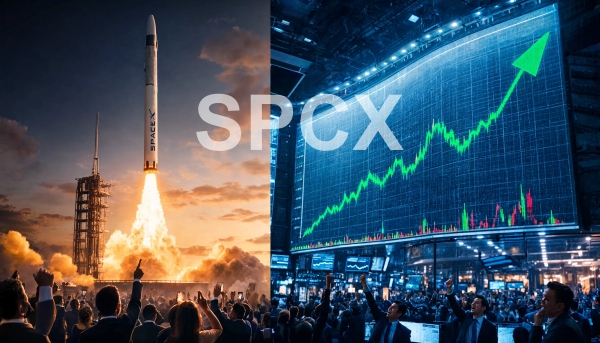
The University of North Carolina (UNC) endowment has posted a return of more than 30 percent over the past year, with SpaceX, which it invested in before any listing, cited as a key asset that lifted performance. Even a university official who had opposed the investment because of risk acknowledged his judgment was wrong, prompting an assessment that long-running private investments in technology companies are paying off.
Blockchain media outlet Cryptopolitan reported on Sept. 7 that assets managed by UNC Management total about $15 billion and delivered a return of more than 30 percent in the year through June.
SpaceX was cited as a key driver of the strong performance. UNC's SpaceX holding reportedly grew to about 10 percent of the endowment at the pre-listing stage.
UNC began investing indirectly in SpaceX around the global financial crisis. At the time, SpaceX was little more than a new rocket company led by Elon Musk, and it was seen as carrying considerable risk because the space industry requires large amounts of capital.
UNC's SpaceX investment began through Founders Fund, a venture capital firm founded by Peter Thiel in 2005. UNC Management was among the fund's early investors, and later secured an indirect stake as the fund invested in SpaceX. Around 2009 to 2010, Founders Fund suggested that UNC invest additional university money in SpaceX.
Holden Thorp, then chancellor of UNC-Chapel Hill, strongly opposed the idea. He recalled telling the investment team, "Are you out of your mind?" Thorp judged rocket development to be too risky for venture investment. He said building rockets was extremely costly and it was difficult to be sure SpaceX could keep raising enough money to continue development.
At the time, the venture capital industry also had a view along the lines of not investing in businesses that bend metal. Since the usual approach was to seek high returns by investing in software or technology companies that can scale with relatively low costs, SpaceX, a rocket manufacturer, was an unusual investment target.
UNC Management pushed ahead with the investment. As SpaceX's corporate value rose sharply over time, the investment team's judgment was ultimately proven correct. Thorp now acknowledges he was wrong. He later said he was glad the team did not follow his opposition.
UNC's SpaceX investment performance was led by Jonathan King and Kevin Tunick. King oversaw investment management for more than 20 years until retiring in 2025, while Tunick handled private investments for about 15 years until retiring in 2023.
It is not only UNC. Major U.S. university endowments are also seeing cases where investments in unlisted technology companies are again lifting returns. Cambridge Associates analysed that some university endowments could catch up with or outperform the S&P 500, which rose more than 20 percent over the same period. Margaret Chen, who oversees the global endowments and foundations segment, cited a small number of highly successful private companies as a key driver of recent performance.
This year in particular, sentiment is shifting on private technology investments that had weighed on endowment returns. That is because the sharply rising value of SpaceX and some artificial intelligence (AI) companies among unlisted firms is being reflected in long-running investment results with a delay.
Past performance had been the opposite. According to data compiled by the National Association of College and University Business Officers and Commonfund, endowments with assets of at least $5 billion posted a three-year annualised return of 7.8 percent through June 2025. Over the same period, the S&P 500's annualised return was 19.7 percent, far outpacing endowments. A key reason cited was that declines in private company values since 2021, along with fewer initial public offerings (IPOs) and mergers and acquisitions (M&A), reduced opportunities for endowments to exit private investments.
But conditions have changed this year. Chen assessed that 2026 is proving to be a particularly notable year for institutions that invested in a small number of large winners in private markets.
The University of Colorado Foundation also posted similar performance. The foundation, which manages a portfolio of about $3.5 billion, recorded a return of 20.3 percent in the year through June. SpaceX, which it has invested in since 2009, also reportedly contributed significantly to returns.
Some also say more time is needed to compare endowment performance accurately. Unlike listed shares, whose prices are formed in public markets in real time, private assets take time to be valued and reflected.
The UNC case has ultimately become an example of how much of a performance gap long-term private endowment investments can create. In particular, SpaceX, once seen as excessively risky, became a key asset that lifted overall endowment returns years later.
The key question going forward is how consistently a small number of large unlisted companies, including SpaceX and AI firms, can continue to drive improvements in endowment returns. Attention is on whether U.S. university endowments, which had lagged public markets, can narrow the performance gap again on the back of rising valuations in private technology companies held for long periods.
 Jinju Hong
hongjj@d-today.co.kr
Jinju Hong
hongjj@d-today.co.kr