
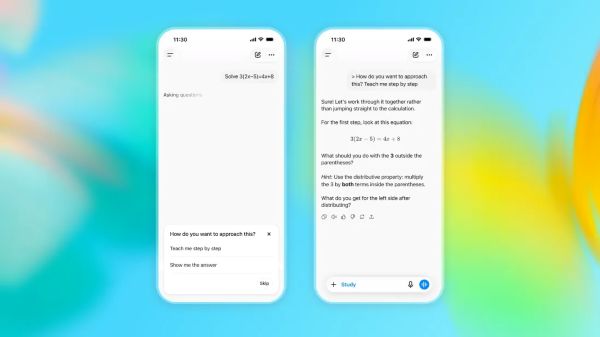
OpenAI has started rolling out a teen version of ChatGPT for users aged 13 to 17. On Aug. 18, multiple foreign media outlets including CNBC reported that accounts in that age group are automatically placed in a teen environment, while access to ChatGPT is completely blocked for users under 13.
The move comes after a series of lawsuits claiming conversations with ChatGPT led to teen suicides. OpenAI has been sued in Florida by state Attorney General James Uthmeier (제임스 우스마이어) on allegations it launched a dangerous product despite knowing the risks, and it is also under investigation by a coalition of state attorneys general. Multiple wrongful-death lawsuits against OpenAI are also under way. The suits claim ChatGPT planted harmful delusions in users and, in some cases, led to suicide.
Around the same time, Meta also entered a major trial over whether it encouraged addictive use by children and teenagers. In the lawsuit filed by a coalition of attorneys general from 29 states in 2023, Meta could be ordered to pay damages of up to hundreds of billions of dollars.
The U.S. Federal Trade Commission last September also launched a probe into seven companies including OpenAI and Meta to assess the impact of AI chatbots on children and teenagers.
How teen ChatGPT is different
OpenAI also strengthened its age verification methods. Even if a user enters a false birthdate, the system estimates whether the account holder is under 18 based on factors such as the main topics the account deals with, active hours and the time elapsed since account creation. Users who are misclassified can go through an age verification process via Persona. Persona reviews an ID or a real-time selfie and deletes uploaded materials within 7 days.
If a parent links to a teen account, the parent can lock chatbot use during specific hours and receive alerts in limited high-risk situations. OpenAI said it does not allow parents to directly read a teen's conversation history.
Ann O'Leary (앤 오리어리), OpenAI's vice president of global policy, said the goal is to prevent teens from being exposed to material they should not see. OpenAI said the teen version did not add entirely new safety features. It said the age estimation feature has been running since early this year, and that parental controls and learning mode were introduced about a year ago.
Teen ChatGPT includes learning features such as learning mode, homework reminders that discourage assignment-style answers, quizzes and learning visualisations, and "study hours" to set time slots for learning mode by default. It also provides prompts discouraging uploads of sensitive images, a teen-only onboarding process, and customisation options such as changing accent colours or voice.
What drove the rollout
OpenAI first revealed plans in September 2025 to introduce a teen-only rating. Around the same time, the Federal Trade Commission carried out formal inquiries on how minors are protected at OpenAI, Meta, Alphabet, xAI, Snap and Character.AI. The FTC particularly targeted "companion"-type chatbots, and referenced a case in which a 16-year-old died after extensive interaction with ChatGPT.
The rapid spread of teen use of AI chatbots is also cited as a driver of the move. A 2025 Common Sense Media survey found more than 70 percent of U.S. teens had used AI chatbots for companionship, and half said they used them regularly. A separate study also identified cases in which ChatGPT, when asked, told 13-year-old users how to get drunk or high, how to hide eating disorders and even how to write a suicide note. OpenAI CEO Sam Altman (샘 알트먼) has said "emotional overdependence" on AI technology is very common among young people.
The teen environment is provided to accounts on free and paid individual plans. OpenAI began applying the teen version to free accounts without additional restrictions from Aug. 18, and plans to complete a full rollout in Australia by Sept. 8.
 Seung-a Yoo
ysah@d-today.co.kr
Seung-a Yoo
ysah@d-today.co.kr