
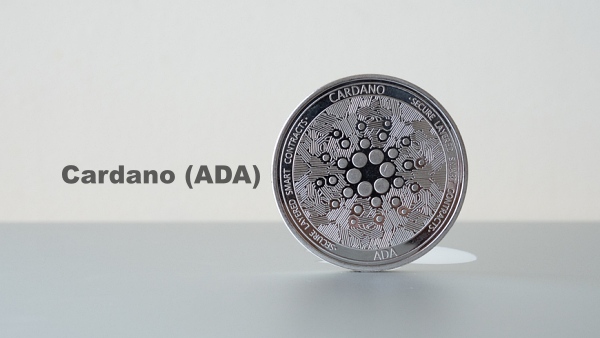
Cardano will pursue its Dijkstra network upgrade in two stages through 2027.
On Aug. 17, blockchain outlet The Crypto Basic reported that the first stage focuses on expanding network throughput and the second on shortening transaction finality time.
The roadmap was disclosed through an Intersect document. Cardano will first push to complete code for Ouroboros Linear Leios (CIP-164), targeting the fourth quarter of 2026. It then plans to introduce Ouroboros Peras (CIP-140) in the second quarter of 2027.
Leios, the core of the first stage, focuses on increasing the network’s transaction processing capacity. It adds “endorsement” blocks to the existing block production structure to process transactions more efficiently. Cardano plans to raise overall network throughput around Leios in the first stage of Dijkstra.
A protocol overhaul will also proceed. The first stage includes nested transactions (CIP-118), guard scripts (CIP-112), improved account addresses (CIP-159) and a simplified staking reward withdrawal process (CIP-181). These changes will be applied to the mainnet after testing and governance procedures.
To this end, the development team launched the public testnet Musashi Dojo on June 23. Developers and network participants are testing Leios-related functions there and verifying performance and stability before applying them to the mainnet.
Peras, the second stage, focuses on reducing transaction finality time. It adds a stake pool voting layer to cut the time it takes for users and applications to judge transactions as finally confirmed. If Leios is responsible for boosting throughput, Peras will take on the role of improving transaction finality speed and reliability.
Mainnet introduction of Peras will also proceed in stages. It will first distribute Peras-compatible nodes to testnet operators so stake pool operators can prepare related infrastructure. It will then conduct the first SPO test after the Preview hard fork and governance procedures.
Testing during the Preview stage is expected to last about 2 weeks. During this period, it will check items such as the voting overlay and payment latency. Peras will then be moved to the pre-production network for additional governance procedures and a second test. This stage will last about 1 to 2 weeks and focus on confirming final readiness before mainnet application.
Final mainnet application will require approval from delegated representatives, stake pool operators and the constitutional committee. Peras can be activated on the mainnet only after all required ratification procedures are completed. Cardano plans to maintain the principle of community-led governance in major protocol change processes through this.
The exact timing for mainnet activation has not yet been set. The current roadmap also marks the application schedule as “TBD”. Future points to watch are whether Leios testnet validation will be completed as planned and whether Peras can move smoothly to the Preview and pre-production stages after governance procedures.
 Yoonseo Lee
yslee@d-today.co.kr
Yoonseo Lee
yslee@d-today.co.kr