
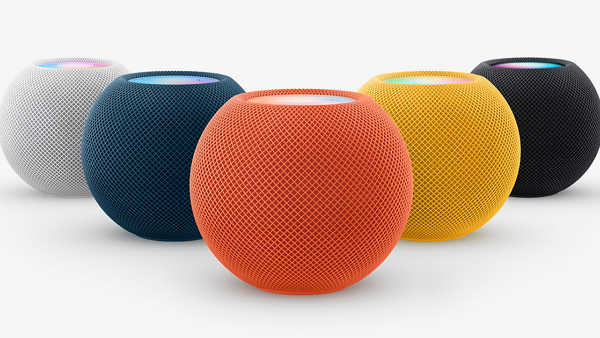
[DigitalToday reporter Jinju Hong (홍진주)] Apple is reportedly preparing to launch a new version of its HomePod mini smart speaker after 6 years. It is expected to improve audio and wireless performance with a faster chip and next-generation Siri AI, while also accelerating the expansion of its smart-home ecosystem.
On Aug. 13, IT outlet 9to5Mac reported that Apple could unveil a next-generation HomePod mini as early as this fall. The HomePod mini currently on sale has seen almost no hardware changes since its October 2020 launch, aside from new color options.
The new model is likely to focus on boosting internal performance rather than significantly changing the design. It may replace the S5 chip, first used in the Apple Watch Series 5 in 2019, with a newer processor. The existing S5 has handled various audio computations on the HomePod mini, including real-time acoustic calibration.
The biggest change is expected to be support for Siri AI. Apple introduced a new Siri in iOS 27 with stronger capabilities such as understanding world knowledge and personal context, controlling apps and handling follow-up questions. Observers expect the next HomePod mini to include a more powerful chip that can use those features.
It is unclear whether the HomePod mini will be able to handle Apple’s latest AI features that run on the iPhone in the same way. Even with an S9-class processor, it may face limits in on-device AI processing at the level of the latest iPhones. In that case, some AI requests may depend on the cloud or on a user’s other Apple devices.
Audio performance is also expected to improve. Specific speaker and microphone configurations have not been disclosed, but Apple is expected to improve sound quality in the new model. Wireless connectivity may also be updated. If Apple’s N1 chip is included, performance for connections such as Wi-Fi, Bluetooth and Thread could improve.
Ultra-wideband (UWB) capabilities may also be enhanced. The current HomePod mini uses a U1 chip to offer features such as Handoff, which lets users transfer music at close range with an iPhone. With a new chip, device-to-device location recognition and connection experiences could become faster and more precise.
The launch is also drawing attention as part of Apple’s smart-home strategy. A new Apple TV 4K is also said to be close to release alongside the HomePod mini 2, and Apple is reportedly developing a separate 7-inch smart display. The product is expected to support HomeKit control, FaceTime and facial recognition, and to run an operating system based on tvOS.
The price is still uncertain. The HomePod mini launched in 2020 at $99, but its current selling price is $129. Apple has previously cited rising component costs, including memory and storage, as reasons for price increases. It is not yet known whether the new model will keep the existing $129 price or raise it further to reflect new hardware.
That makes the timing of a purchase another question. The current HomePod mini can still be used for basic functions such as playing music, timers, intercom and Apple Home control, but buying 6-year-old hardware for $129 could feel burdensome.
On the other hand, the possibility of discounts for the existing model after the new launch is another variable. For consumers who already use multiple HomePod minis or only need basic smart-home functions, an older model at a lower price could be an alternative.
Ultimately, the key to the HomePod mini 2 is not a simple hardware upgrade. After 6 years, how well the returning HomePod mini implements Siri AI, and how it connects that with Apple’s next-generation smart-home ecosystem, is expected to determine its success.
 Jinju Hong
hongjj@d-today.co.kr
Jinju Hong
hongjj@d-today.co.kr