
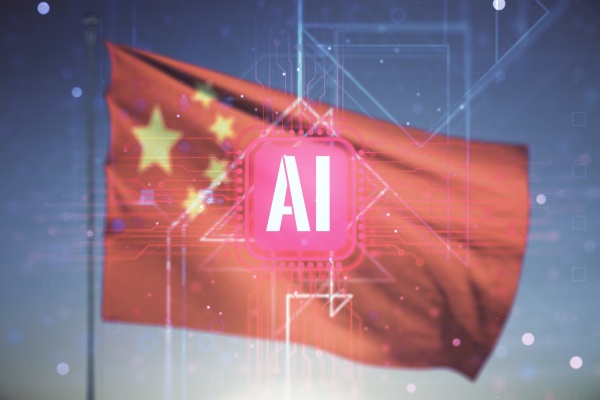
Chinese technology is rapidly seeping into the supply chains of major global companies, centered on artificial intelligence and electric vehicle batteries and automotive software, CNBC reported on Thursday.
Apple is using Alibaba and Baidu for AI services in China, and Ford has adopted CATL's battery technology.
The trend is being seen as a structural shift beyond individual partnerships. Volkswagen is jointly developing smart electric vehicles for the China market with Xpeng, and Stellantis is expanding cooperation with Leapmotor on electric vehicle production and joint procurement. Kitty Fok of IDC China said, "Five years ago, China was where global companies sold products, but now it has become where capabilities are sourced in some industries."
Behind it are not only the price competitiveness secured by Chinese companies but also production scale, supply chain integration and development speed. Sumen Mandal of Counterpoint Research pointed out that Chinese automakers such as BYD, Changan and Chery accounted for about 63 percent of the global EV market in 2025, and that Chinese battery makers such as CATL, BYD, CALB and Gotion were close to a 70 percent share. Mandal assessed that China's technological rise is moving beyond low-cost production to scale, supply chain depth and the pace of innovation.
The area where the shift has advanced the most is EV batteries. CATL is already deeply embedded in the global auto industry. Ford is pursuing a plan to apply CATL's lithium iron phosphate battery technology at its $3.5 billion battery plant in Michigan. Fok said that for EV batteries, "the structural shift is already over," and changing suppliers is not a procurement issue decided within a quarter but a matter that requires years of engineering, testing and re-certification.
A similar shift is appearing in AI. For some companies, however, local operations in China are a direct driver. When overseas operators run AI services or cloud infrastructure in China, regulations often leave them with no choice but to work with local firms. Mentioning Apple's case, Fok said, "In China, for many, it is not a matter of choice."
Some analysis also says adopting Chinese technology does not end with meeting local regulatory requirements. Lian Jye Su of research firm Omdia said he sees a "slow but sustained structural shift in supply chains and the flow of innovation" in batteries, EVs, energy storage systems and applied AI. He cited as a key factor that global automakers are increasingly seeking Chinese suppliers for software, AI and various vehicle systems to sell in the China market.
The competitiveness of AI models has also emerged as a variable. In an IDC survey this year of European companies, security and compliance requirements and superior performance were cited more often than cost as reasons for broadly adopting Chinese AI models. Fok said, "The conventional wisdom that Western companies flock to Chinese AI because it is cheap has been reversed," adding, "Decisions are driven by performance, and compliance is becoming the threshold." Chinese companies such as Alibaba and DeepSeek focusing on open-source models was also cited as a factor that increased access for global developers.
U.S. technology restrictions on China continue to tighten. After putting Huawei on a sanctions list in 2019, the United States restricted exports of advanced semiconductors and chipmaking equipment and has also blocked some U.S. capital investment in China's semiconductor, quantum technology and AI sectors. Chinese companies including SMIC were also included in the sanctions. Still, Su said such restrictions served as a catalyst for technological innovation and efficiency gains within China. He said the core impact of U.S. rules has been to accelerate domestic innovation and efficiency in China, and that Chinese companies are still maintaining competitiveness in AI, batteries and automotive software.
Chinese technology is not expected to spread at the same pace in all areas. Su forecast the greatest resistance to Chinese technology in advanced semiconductors, cybersecurity-linked services, defense and national security-related areas. Mandal, meanwhile, expected wider global adoption of Chinese technology in EVs, batteries, consumer electronics, robots, drones, and some AI and semiconductor areas.
The role of Chinese technology is changing by industry. Structural change is already well advanced in batteries and electronics manufacturing, AI has entered a transition phase, and automotive software remains at an early stage. For global companies, a phase continues in which they must weigh practical needs such as performance, supply chains and access to the China market while managing geopolitical risks.
 Jinju Hong
hongjj@d-today.co.kr
Jinju Hong
hongjj@d-today.co.kr