
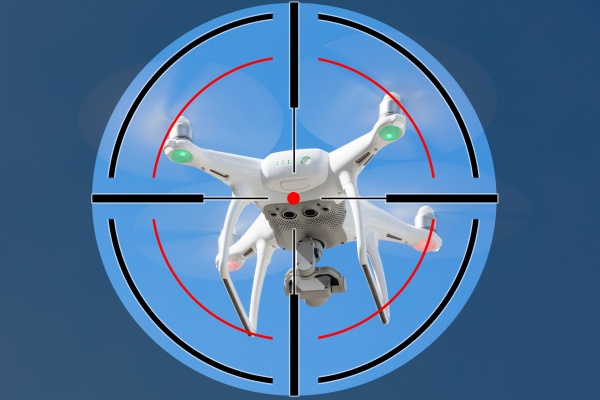
The U.S. Defense Department has expanded a private online marketplace that can be used to procure counter-drone equipment. It has built a centralized procurement system that only approved buyers can access. It plans to use AI in the future to recommend equipment configurations tailored to threats, budgets and operating environments.
On Aug. 13 local time, IT outlet TechRadar reported the platform is a counter-uncrewed aircraft system (C-UAS) procurement platform operated by U.S. Joint Interagency Task Force 401 (JIATF 401). Only pre-approved buyers can use it for now, and third parties cannot view listed products or inventory.
The platform expands a procurement trial that has been run privately since February. Buyers are limited to federal procurement officials, military commanders, and pre-approved allied and partner-country defense ministry officials. Even with access, the information a user can view differs depending on export-control classification.
Suppliers must also undergo a separate screening process. Only companies that pass corporate verification, product evaluation and checks on compliance with export-control rules can register equipment on the marketplace. The structure controls access to information because exposure of details such as performance or limitations of counter-drone equipment could affect actual operations.
Development and operation of the platform are handled by New York software company Kaizen Laboratories (Kaizen Laboratories). The company is building the system under a $15 million prototype contract. Transaction volume is still at an early stage but is rising. JIATF-401 said cumulative purchases increased to $21 million in early August from $13 million in April.
Kaizen Laboratories said the platform is currently in a slow rollout phase. Its strategy is to first verify through limited orders that the ordering and product review processes work properly, then expand usage. The focus is on confirming the stability and security of the procurement system rather than rapidly scaling transaction volume in a short period.
AI features will be added in the future. Kaizen Laboratories is preparing a function in which users enter threat profiles, budgets, readiness and operating environments, and AI analyses products on the marketplace to recommend force configurations needed for counter-drone response. As of early August, it said the function is expected to begin operation within days.
If introduced, the function would allow buyers to receive AI recommendations for combinations suited to their operating environment instead of directly comparing numerous items. The approach is to propose configurations across the so-called kill chain, from detection to tracking, identification and neutralisation, beyond sales of single items.
The user base is also expanding. Countries the United States has publicly referred to as partner countries include Australia, Poland, South Korea, Britain and Romania. U.S. Army Secretary Dan Driscoll said state governments and local investigative agencies are also being incorporated into the platform.
The Pentagon is building this procurement system against a backdrop of rapidly changing drone threats. It has judged that existing complex procurement procedures alone make it difficult to respond quickly to new threats and equipment demand. Attention is focused on how far the AI recommendation function will link to actual purchase decisions and how much the platform can expand as a joint procurement channel for the United States and allies while maintaining restricted access.
 Jinju Hong (홍진주)
hongjj@d-today.co.kr
Jinju Hong (홍진주)
hongjj@d-today.co.kr