
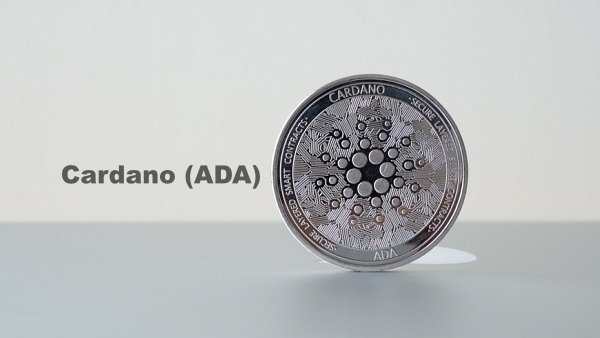
[DigitalToday reporter Yoonseo Lee (이윤서)] Cardano investors are maintaining optimism despite a recent correction in the ADA price.
On Aug. 13 (local time), blockchain media outlet The Crypto Basic said key drivers of expectations have emerged, including meeting qualifications for a spot exchange-traded fund (ETF), DeFi growth, scalability upgrades and links to Bitcoin DeFi.
ADA rose to $0.2107 last week but later saw a sharp correction. It has recently traded around $0.18 and is now above $0.1856, down 11.91 percent from its recent high. Investors are paying more attention to future network expansion factors than short-term price moves.
One of the biggest variables is the possibility of a spot ETF. Grayscale withdrew an S-1 filing related to a Cardano spot ETF last week, becoming a short-term negative. But Cardano met one key qualification in the U.S. Securities and Exchange Commission’s simplified spot ETF review framework. Cardano was expected to meet the six-month ETF eligibility requirement needed for listing around Aug. 9, and earlier CME Group launched regulated ADA futures on Feb. 9.
Expanding inter-chain connectivity is also seen as a factor supporting expectations. The Cardano community is focusing on on-chain IBC rails connecting to Injective. While still at the testnet stage, users can move ADA from Cardano to Injective and move INJ back from Injective to Cardano. If such expansion gains traction, Cardano’s usage could broaden into other blockchain ecosystems.
The expansion of the DeFi ecosystem is also expected to pick up speed. The community recently approved AlphaGrowth’s Cardano PRIME proposal and allocated 120 million ADA. The funds are set to be used to increase DeFi activity and strengthen competitiveness against major ecosystems such as Solana and Ethereum.
Charles Hoskinson (찰스 호스킨슨), Cardano’s founder, also mentioned the potential for growth in total value locked (TVL). He offered an optimistic outlook that TVL could be increased to $1 billion within 1 year through RealFi. RealFi is still in its first testing stage, but more than 3,000 wallets have been activated since launch and on-chain operations have exceeded 36,000.
Scalability upgrades are also a key variable. The community sees Ouroboros Leios and Hydra as the next catalysts for ADA. The two projects aim to significantly increase transaction throughput while maintaining the security and decentralisation of Cardano’s base layer. Leios is expected to launch on the mainnet this year, but Hydra’s launch timing has not yet been confirmed.
Stronger links to Bitcoin DeFi are also supporting investor sentiment. Hoskinson said earlier this week that major optimisation results had been achieved on a BitVM-based Bitcoin-Cardano bridge. Based on mainnet proof, he said data requirements fell to 0.0281 GB from 40 GiB, execution time dropped to 0.149 seconds from 354 seconds, and cost declined to $37 from $14,211.
If these improved figures continue in real operating environments, Cardano may be seen as having the potential to expand its position as a Bitcoin-based DeFi infrastructure. ADA price moves have been weak in recent days, but the Cardano ecosystem is preparing for the next phase based on multiple factors including ETF eligibility, expanded interoperability, DeFi growth, improved scalability and links to Bitcoin.
 Yoonseo Lee
yslee@d-today.co.kr
Yoonseo Lee
yslee@d-today.co.kr