
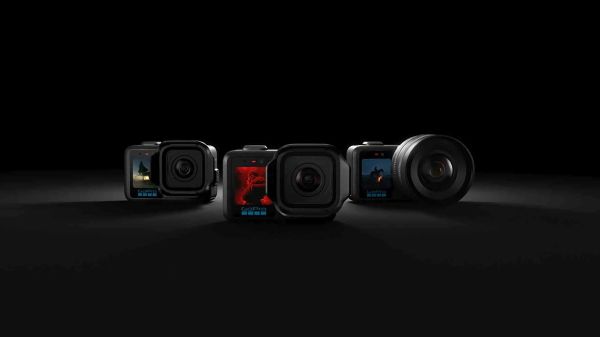
GoPro posted a $51 million net loss for the second quarter as the company's process to review a sale entered its final stage.
On Aug. 13, online outlet Gigazine reported that GoPro founder and CEO Nicholas Woodman (니컬러스 우드먼) said on an earnings conference call that an assessment of a possible sale approved by the board in May was in its "final stage".
The results show GoPro's deterioration is moving beyond a short-term slump into a structural crisis. Camera shipments in April to June fell about 38 percent from a year earlier to about 291,000 units. Revenue fell 31 percent to $105 million. Quarterly losses widened to $51 million and cash and cash equivalents dropped to $27.3 million.
GoPro has already said in a June filing with the U.S. Securities and Exchange Commission that there is "substantial doubt" about its ability to continue operations for the next 12 months. The company cited a slowdown in sales and a sharp rise in memory costs as key reasons. In the last week of March 2026, memory costs jumped 80 percent to 115 percent. In April, a supplier told GoPro it planned to cut production of memory used in GoPro products, increasing volatility in parts prices and supply.
The company has reviewed strategic options, including a sale or merger, as a response. Woodman's reference to a "final stage" does not mean a deal has been completed. The buyer, price and deal structure have not been disclosed. The remark is taken to suggest a deal could be reached within months.
The weak performance also showed up across distribution channels. Direct sales through GoPro.com rose 13 percent from a year earlier, but retail sales plunged 48 percent. Inside and outside the industry, some interpreted this as GoPro's presence weakening in offline distribution. Chief Financial Officer Brian Traw (브라이언 트랫) said, "The new camera is not yet fully in the distribution network," adding, "The decline in retail sales reflects the fact that the rollout of the new product is under way."
The second quarter was the first full results period after the Mission 1 series was launched in May 2026 and stocked in stores. Markets were watching whether the new product would be a turning point, but the pace of shrinkage in the existing hardware business ultimately outstripped the pace of new-product sales. GoPro in April also announced restructuring that cut about 145 jobs, about 23 percent of its workforce, citing operating cost reductions and stronger operating leverage.
Intensifying competition is also in the background. GoPro has faced earnings pressure as competition with DJI and Insta360 intensified and as smartphone cameras spread. Full-year results for 2025 fell from the prior year and it posted a $9 million loss in the fourth quarter of 2025. Against this backdrop, a sales decline that has continued since 2021 has not reversed this year.
It is also a burden that the situation is hard to view as a broad demand slowdown across the camera industry. An analysis cited by the outlet said other camera makers such as Canon, Sony and Fujifilm generally showed a solid trend. The same analysis said five straight years of weak performance would be difficult to reverse with the launch of a single new product. The key issues ahead for GoPro are whether wider distribution of the Mission 1 series leads to a rebound in revenue and what form the ongoing sale review ultimately takes.
 Jinju Hong
hongjj@d-today.co.kr
Jinju Hong
hongjj@d-today.co.kr