
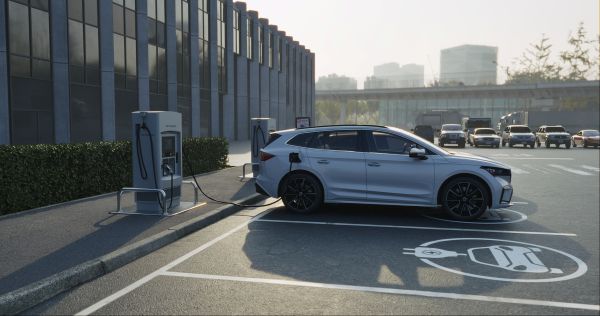
A growing view is that easing range anxiety among U.S. electric-vehicle drivers will take more than increasing the number of chargers. Even if charging stations exist, drivers may feel charging infrastructure is lacking if they cannot easily spot them on highways.
Electrek reported on Aug. 12 that, after U.S. President Donald Trump described EV range anxiety as a kind of “disease” at a recent political rally in Las Vegas, a claim emerged that the core issue is the visibility of charging infrastructure.
Trump said that while driving on highways he rarely sees advertisements or signs guiding drivers to EV charging stations. Electrek said the comment touches a fundamental part of the anxiety felt by EV drivers.
Drivers of internal combustion engine vehicles repeatedly encounter fuel-related signs on highways. Because they can check in advance the distance to the next gas station and where to exit, they naturally build confidence in the refuelling network. EV drivers, by contrast, find it difficult to get the same level of visual information.
Critics also say it can be hard to find highway signs pointing to charging stations in some areas, including parts of the U.S. Midwest and inland regions. Even where chargers are installed, charging infrastructure can feel insufficient if drivers do not recognise they are there.
One proposed solution is to more actively integrate charging-station signage into highway systems. If long-distance drivers can confirm charging locations at regular intervals, the explanation goes, psychological trust in the infrastructure can be improved without greatly increasing the number of chargers.
This suggests the focus of EV infrastructure policy is expanding beyond simple charger counts and charging speed to the driver experience. How easily drivers can find and use charging stations, as much as how many are installed, could influence EV adoption.
Automakers are also simplifying the charging experience. General Motors' GM Energy Pass lets Cadillac, Chevrolet and GMC EV drivers charge at partner stations without separately managing multiple charging apps or payment methods. If drivers connect the car to a charger, they can start charging without downloading an app or taking out a phone or credit card.
Electrek said the key point is not payment convenience but continually showing drivers that a charging network exists. Even if charging becomes easy, range anxiety may not fade if drivers lack confidence they can find a charging station during long-distance travel.
The next task for the U.S. EV market is expected to be improving highway signage systems alongside expanding charging networks. Beyond installing more chargers, making it easier for drivers to see and trust the presence of charging networks on the road is emerging as a new variable in the mainstreaming of EVs.
 Jinju Hong
hongjj@d-today.co.kr
Jinju Hong
hongjj@d-today.co.kr