
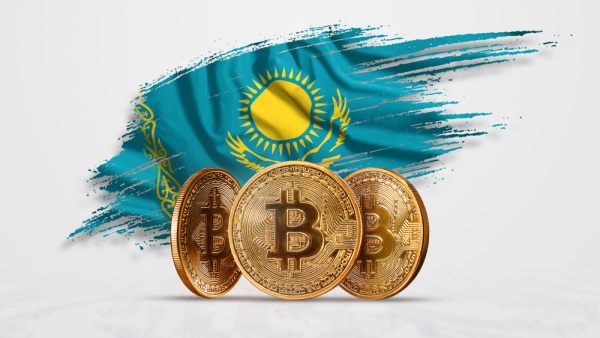
Kazakhstan has decided to exempt individual investors from income tax on capital gains from trading digital assets for 3 years.
On Aug. 11 (local time), blockchain media outlet Cryptopolitan reported that Kazakhstan President Kassym-Jomart Tokayev (카심조마르트 토카예프) signed a presidential decree containing a temporary tax exemption for cryptocurrency holders.
The measure was jointly prepared by the Ministry of AI and Digital Development, the National Bank of Kazakhstan and the Astana International Financial Centre (AIFC). Under it, individual investors will not pay personal income tax for 3 years on profits earned from trading digital assets. Assets linked to fraud, money laundering or unlicensed cryptocurrency services are excluded from the exemption.
The Kazakhstan government expects about 1 million cryptocurrency wallets to move from overseas platforms to licensed domestic exchanges because of the measure. AIFC data show Kazakhstan citizens hold about 1 million cryptocurrency wallets, while registered users of licensed local exchanges stood at 256,900 as of March. The move was also presented as stemming from the fact that about 95 percent of all cryptocurrency transactions take place outside regulated markets through peer-to-peer trading or overseas platforms.
Authorities are also preparing follow-up rules for after the tax benefit ends. Gizat Baitursynov (기잣 바이트르시노프), vice minister at the Ministry of AI and Digital Development, said the ministry has already drawn up a simplified taxation system to apply after the 3-year deferral ends. He also said it is separately pushing a plan to cancel tax audits covering the past 3 years for existing investors.
Kazakhstan is also seeking to bring the power issues in the mining industry back under a regulated framework. After China banned bitcoin mining in 2021, Kazakhstan emerged as a major mining hub after the United States and rose to third in the world by hashrate in 2022. But surging power demand strained an aging grid, leading to emergency shutdowns at 3 power plants in the northeast in October 2021 and blackouts. Miners' power use was at one point estimated at about 8 percent of total national power generation.
The new presidential decree also includes measures to prevent new mining demand from flowing directly into the public power grid. It allows oil and gas fields to feed associated gas that the country does not use into self-generation facilities and divert the electricity to mining. It also pairs a '70-30' model that lets data centres and mining firms directly use up to 70 percent of new power added through infrastructure upgrades.
Market participants focused on easing tax uncertainty. Nurkhat Kushimov (누르하트 쿠시모프), head of Binance Kazakhstan, said the tax exemption was the most important measure in the package and assessed it as increasing the attractiveness of a licensed jurisdiction. Bakhtzhan Kenzhebayev (바흐트잔 켄제바예프), head of the Kazakhstan Fintech, AI and Cryptocurrency Industry Association, also said the exemption removes a key uncertainty for investors. He warned, however, that if legal definitions are loose, it could be abused and the policy could be reversed within 1 to 2 years.
On the regulatory front, international cooperation is also being pursued. The OECD Global Forum said Kazakhstan is introducing a cryptocurrency asset reporting system ahead of its first automatic exchange of cryptocurrency tax information in 2027. As a result, Kazakhstan's tax deferral is more likely to lead to a policy shift aimed at absorbing overseas trading into the domestic regulated market and then linking it to reporting and taxation systems, rather than being a simple tax cut.
 Jinju Hong
hongjj@d-today.co.kr
Jinju Hong
hongjj@d-today.co.kr