
Rivian is moving to expand in the mass market by leading with the launch of its mid-priced electric SUV, the R2, while also broadening its business into autonomous driving, charging infrastructure and humanoid robots.
TechCrunch reported on Aug. 11 that Rivian Chief Executive RJ Scaringe (RJ 스캐린지) is set to explain the background to the strategy and lessons from manufacturing at Disrupt 2026, which runs from Oct. 13 to 15 at Moscone Center in San Francisco.
The core is the R2. Rivian has begun with the launch of the R2 SUV, priced at about $58,000. Scaringe sees it driving market expansion that its higher-priced R1T and R1S models could not achieve. He described the R2 as “perhaps the most important launch we’ve had so far.” With demand for high-priced electric vehicles slowing, the message is that whether Rivian can move beyond a niche market depends on this model.
The competitive landscape is also tough. In the electric-vehicle market, pressure is rising from Chinese companies leading with low-price offensives. In this environment, Rivian is responding not only by expanding its vehicle lineup, but by scaling software and infrastructure at the same time.
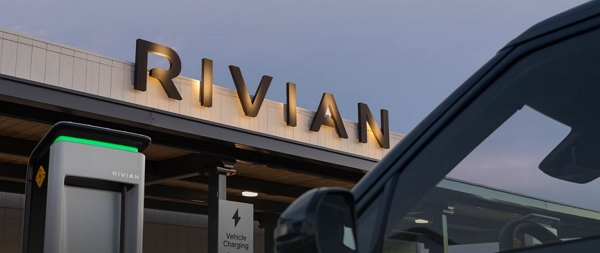
Autonomous driving is one of them. Scaringe has presented a roadmap to reach full Level 4 autonomous driving by 2028. Rivian is also building its own charging network and has set a goal of growing it into one of the largest operators in the United States. It is read as a plan to widen customer touchpoints by bundling EV sales with charging infrastructure.
Expansion into robotics is also proceeding in parallel. Scaringe founded humanoid robotics company Mind Robotics and currently serves as its board chairman and interim CEO. Mind Robotics raised $900 million this year alone, and Rivian is a major shareholder and an early customer. The two companies are pushing a plan to use Rivian’s plant in Normal, Illinois, as a testbed for assembly lines where people and robots coexist more closely.
Scaringe sees the process as an opportunity to directly respond to an expected labor shortage. The Rivian plant could be used not only as a production base, but also as a site to verify the effects of deploying robots.
A key point to watch is whether Rivian’s multiple investments can be tied into a single strategy. Scaringe sees Rivian standing at the intersection where AI, software, robotics, manufacturing and transportation meet, and believes this area will become busier going forward. He is emphasizing an approach of making physical products first and then combining AI on top of them. This contrasts with a trend in which many AI companies start with software and then expand into hardware.
As a result, Rivian’s next step depends less on expanding EV sales itself than on how it connects manufacturing capability, software, factory automation and the charging network into a single system. Scaringe is expected to focus his Disrupt 2026 remarks on that point.
 Jinju Hong
hongjj@d-today.co.kr
Jinju Hong
hongjj@d-today.co.kr