
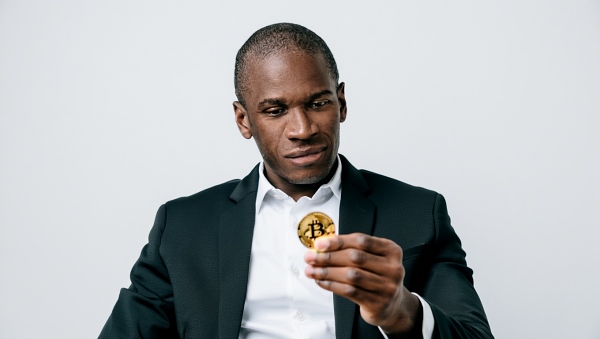
[DigitalToday reporter Yoonseo Lee] BitMEX co-founder Arthur Hayes (아서 헤이즈) argued that the U.S. Federal Reserve could expand dollar liquidity provision as Japan seeks to induce a stronger yen.
Cryptopolitan, a blockchain media outlet, reported on Aug. 11 that Hayes said in a recent essay that U.S. Treasury Secretary Scott Bessent (스콧 베센트) may seek to use the Fed's liquidity tools to stabilise the dollar-yen exchange rate.
Hayes focused on the Fed's FIMA (foreign and international monetary authorities) repo facility. Under his scenario, Japan could post its holdings of U.S. Treasuries as collateral at the Fed to obtain dollars, then sell dollars and buy yen in the foreign exchange market. It would then invest the yen it secures in domestic assets such as Japanese government bonds and stocks.
He presented three options for Japan to induce a stronger yen. They were: the Bank of Japan (BOJ) raising interest rates aggressively; getting institutions such as GPIF (Government Pension Investment Fund) to sell overseas assets and bring funds back to Japan; and Japan's finance ministry obtaining dollars through FIMA and buying yen. He judged the third option as a choice that both the United States and Japan could bear.
He analysed the first option as costly due to the interest-rate gap and the BOJ's asset structure. He said returns on dollar assets are currently about 2.75 percentage points higher than returns on yen assets, keeping the carry trade alive in which investors borrow low-rate yen and invest in dollar assets. If the BOJ raises rates, that structure could weaken, increasing pressure for a stronger yen.
He added that the BOJ holds large amounts of Japanese government bonds after yield curve control, meaning it would have to accept falling bond prices and growing valuation losses if rates rise. Hayes said, "When rates rise, bond prices fall," and added, "The more bond prices fall, the larger the BOJ's unrealised losses become."
He saw the second option as carrying less political burden in Japan but potentially weighing on U.S. markets. GPIF manages about $1 trillion to $2 trillion in assets and has raised the share of overseas stock and bond investment since its 2014 asset allocation change. Hayes said that if Japanese authorities encourage increased domestic securities investment and extend that to GPIF, hundreds of billions of dollars could return to Japan. But if Japan becomes a large seller of U.S. Treasuries and stocks, the United States would gain the effect of a stronger yen while losing a major source of overseas demand for its assets.
Hayes argued that neither the United States nor Japan would want a situation in which the USD/JPY exchange rate falls sharply. From that perspective, he said using FIMA could be an indirect tool that allows Japan to defend the yen without directly selling U.S. Treasuries.
He extended his reasoning to the cryptocurrency market. He said that an increase in dollar lending through FIMA could expand the Fed's balance sheet, and that the liquidity supplied in that way could flow into risk and alternative assets such as bitcoin and ether, gold and gold mining stocks.
He also raised the possibility that the FIMA facility itself could change. Hayes said the Fed's foreign currency committee could adjust FIMA operating rules, and that U.S. President Donald Trump and Treasury Secretary Bessent could press Fed Chair Kevin Warsh (케빈 워시) to make related changes. But this was a scenario put forward by Hayes, and it was not confirmed whether or when any policy would be implemented.
Hayes also disclosed his investment positions. He said his existing portfolio is concentrated in bitcoin, physical gold and gold mining stocks, and he assessed ether as a leading alternative among major large cryptocurrencies. He particularly focused on the possibility that ether could establish itself as the core security layer for real-world assets (RWA).
This claim is a scenario that links Japan's yen defence, U.S. liquidity provision and cryptocurrency price moves into a single chain. Key points to watch will be what exchange-rate defence tool Japan actually chooses and whether the Fed adjusts the scope of FIMA operations.
My essay "Yen-quake" walks readers through how Buffalo Bill Bessent plans to manipulate the dollar-yen exchange rate and turn the money printer back on. "While a weak, weaker, and weakest yen propelled global asset markets higher over the past decade, like all good things for… pic.twitter.com/4tXwuKMFPg
 Yoonseo Lee
yslee@d-today.co.kr
Yoonseo Lee
yslee@d-today.co.kr