
Daedong said on Sunday it posted record second-quarter results. Second-quarter revenue rose 12.7 percent from a year earlier to 467.0 billion won, and operating profit climbed 64.3 percent to 41.2 billion won. The operating margin was 8.8 percent.
First-half revenue totalled 844.8 billion won and operating profit was 47.2 billion won. The first-half revenue exceeded the previous high of 835.8 billion won in the first half of 2023, setting a new record. Second-quarter revenue also topped 457.3 billion won in the second quarter of 2022, marking a quarterly record. Ryu Hyun-woo (원유현), vice chairman of Daedong, said, "Even amid a slump in the global farm machinery market, we strengthened our product portfolio and distribution competitiveness to achieve record revenue in both the second quarter and the first half."
Compared with a year earlier, the North American farm machinery market fell 13 percent in the first half, and the domestic market declined 3.4 percent. Europe also managed growth of just 0.7 percent. Daedong increased earnings in that environment by boosting product competitiveness by region and strengthening distribution channels, the company said.
In North America, it diversified its portfolio beyond small tractors to include mid-to-large tractors and small construction equipment such as skid-steer loaders and mini excavators. First-half sales of the HX model, a flagship high-value mid-to-large tractor, rose 55 percent from a year earlier. Small construction equipment also increased 28 percent. It opened an integrated logistics warehouse in Washington state in the United States in the third quarter last year and secured 30 new dealers, expanding its dealer network to 600.
In Europe, first-half revenue rose 31 percent from a year earlier to 74.1 billion won on a strategy centred on mid-to-large tractors. Its market share also increased by 0.2 percentage points to 2.5 percent. In South Korea, a distribution overhaul focused on regional dealerships that began last year is gaining traction, pushing market share into the 40 percent range. The number of regional dealerships expanded to 18.
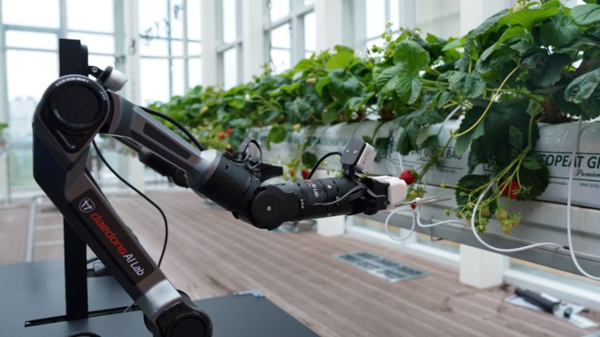
Recurring revenue after equipment sales is also strengthening. First-half parts revenue rose 20 percent from a year earlier to 56.7 billion won. Daedong is expanding touchpoints between equipment and customers through a connected platform and building a structure that leads to parts and services. Ryu said, "Making this year the first year of Daedong's major AI and robotics transformation, we will more strongly push future businesses such as precision agriculture, AI farm machinery and agricultural robots, based on the competitiveness and results we secured in our existing businesses."
 Dae-geon Seok
d2dg@d-today.co.kr
Dae-geon Seok
d2dg@d-today.co.kr