
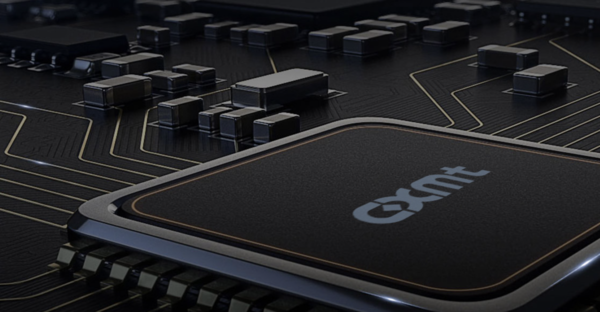
Apple is testing the use of chips from Chinese DRAM maker ChangXin Memory Technologies (CXMT) to respond to a memory supply crunch, but U.S. regulations have effectively blocked production of customised chips, a report said.
Online media outlet Gigazine reported on Sunday that Apple is reviewing whether it can apply CXMT memory to devices sold in China, but bringing the supplier into its supply chain is not easy because of U.S. technology controls on China.
The central issue is not whether CXMT can make memory to Apple’s desired specifications, but that transferring the technical information needed for that process is itself restricted. Apple has typically fine-tuned components to match its devices to improve product performance. But under U.S. federal rules, U.S. companies cannot transfer technology to CXMT, including the technical details and product specification information for special chips Apple would use. That makes it effectively impossible for Apple to place orders with CXMT for made-to-order memory, the report said.
Apple was already believed to have tested in July whether it could apply CXMT’s DRAM chips to devices for the China market. The work was a technical certification step before adoption in mass production. It was closer to checking in advance whether the supplier could be brought into the supply chain regardless of political approval, rather than deciding on commercial adoption.
The backdrop is a sharp rise in memory prices and supply shortages. The U.S. government in December 2024 announced a ban on exports to China covering 24 types of semiconductor manufacturing equipment and three categories of software, and placed 140 Chinese companies on what it called the 1260H list. CXMT was excluded at the time, but it was included in the restrictions when 188 companies were added in June 2026. Apple then reportedly asked the Trump administration to allow it to do business with CXMT.
The market is watching CXMT’s rise. CXMT is growing into a top-four global DRAM maker, and there are expectations it could become a new supplier in a market dominated by Samsung Electronics, SK hynix and Micron. But industry analysts saw CXMT’s technology as still lagging overseas rivals. They cite its inability to use cutting-edge manufacturing equipment as a limitation. In that case, Apple would have to use standard CXMT memory and may need to revise some product designs.
On pricing, Apple’s calculations have also become more complicated. Apple raised prices in June for multiple hardware products such as Macs and iPads at once, after a surge in memory prices. Apple has used a strategy of making multiple memory suppliers compete to secure cheaper sources, but demand growth and U.S. regulations have increased Micron’s bargaining power, making the previous procurement approach harder to use, the report said. CXMT also reportedly rejected Apple’s demands for price cuts and offered prices similar to or higher than those of SK hynix and Samsung Electronics.
Unlike Apple, PC makers have begun adopting CXMT memory, though in a limited way. HP, Asus and Acer were believed to have started using CXMT chips in some laptops sold outside the United States. But the scope remains narrow. CXMT is supplying most of its output first to Chinese customers such as Huawei, so as of July the volume of CXMT chip use and the number of models using it were reported to be very limited.
PC makers are also being cautious, mindful of their relationships with the three established memory companies. Even so, there was testimony that amid an unprecedented memory shortage, many major PC makers completed CXMT DRAM certification procedures around mid-2026 and began installing it in laptops on a limited basis.
Acer said it does not disclose suppliers, but it is "adjusting operations flexibly while staying in close contact with various global manufacturers and suppliers" to respond to fluctuations in component prices. It also said it is "strengthening supply chain resilience" by working with multiple manufacturers and suppliers.
In this situation, CXMT is emerging as an alternative amid the memory supply crunch, but Apple must solve regulatory, pricing and technical customisation issues at the same time. As a result, even if CXMT enters Apple’s supply chain, it is more likely for now to be limited to some China-market products or the use of standard memory, the report said.
 Jinju Hong
hongjj@d-today.co.kr
Jinju Hong
hongjj@d-today.co.kr