
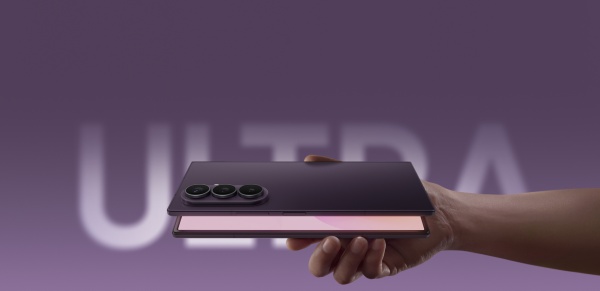
[DigitalToday reporter Jinju Hong (홍진주)] Samsung Electronics’ Galaxy Z Fold8 and Galaxy Z Fold8 Ultra are shown to offer different user experiences even within the same foldable lineup. The Galaxy Z Fold8 Ultra leads on screen size, but reviews say the differently shaped screen on the Galaxy Z Fold8 is more advantageous for consuming content such as Netflix and YouTube.
On Aug. 2 (local time), IT outlet TechRadar reported that the Galaxy Z Fold8 uses a 7.6-inch internal display with a 4:3 aspect ratio, showing strength for video viewing and social media content consumption.
By contrast, the Galaxy Z Fold8 Ultra adopts an 8-inch large display with a 10:9 aspect ratio. It provides a wider workspace, but when watching landscape content such as movies or YouTube, the difference in aspect ratio often results in larger black bars.
The key in this comparison was the ratio, not the screen size. Samsung Electronics described the Galaxy Z Fold8’s aspect ratio as a "new standard for content viewing".
In actual tests, the Galaxy Z Fold8 made better use of the screen than the Galaxy Z Fold8 Ultra when watching Netflix and YouTube. There were relatively smaller black bars at the top and bottom, and less wasted space on the sides for vertical content.
In particular, when used in a 10:16 format, the Galaxy Z Fold8 showed content filling up to the area around the front camera. The Galaxy Z Fold8 Ultra showed a difference in screen use in the same format.
The Galaxy Z Fold8 did not show an advantage in every environment. When used in a 3:4 orientation, it produced larger black bars than the Galaxy Z Fold8 Ultra. Samsung Electronics said that orientation is better suited to vertical-focused tasks such as e-books or web browsing.
The experience of watching Instagram Reels did not differ much between the two products. On weight, the Galaxy Z Fold8 is 201 grams and the Galaxy Z Fold8 Ultra is 215 grams, a difference of 14 grams. For users who consume short videos for long periods, the relatively lighter model may be less burdensome.
Differences between the two products also appear in product strategy. The Galaxy Z Fold8 focuses on a relatively smaller size, lower price and content consumption experience. The Galaxy Z Fold8 Ultra highlights productivity and premium functions with a larger screen and higher-end camera configuration.
Their screen-use purposes also differ. The Galaxy Z Fold8 is suited to content consumption such as video viewing and social media use, while the Galaxy Z Fold8 Ultra has a structure that benefits users who need a wider workspace, such as for spreadsheet work or multitasking.
The comparison was made within each service’s supported range. On Netflix, a comparison between the Galaxy Z Fold8 in a 16:10 format and the Galaxy Z Fold8 Ultra in a 21:9 format was not supported, and some aspect ratio combinations were not applied on Instagram either.
Ultimately, the difference between the two products leads to the question of whether a big screen is always a better screen. The Galaxy Z Fold8 strengthened the content viewing experience through its aspect ratio, while the Galaxy Z Fold8 Ultra was designed to provide a wider workspace.
The differences between the two products show that competition standards in the foldable smartphone market are moving beyond simple screen size and becoming more segmented around how users use the screen.
 Jinju Hong
hongjj@d-today.co.kr
Jinju Hong
hongjj@d-today.co.kr