
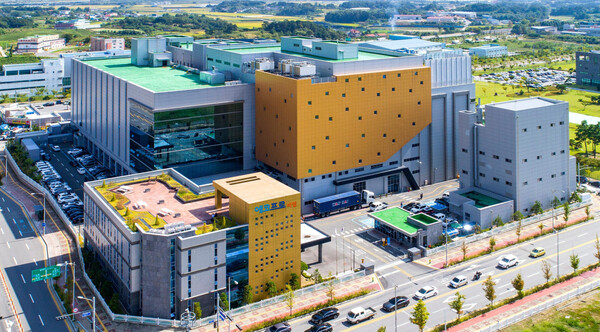
Ecopro BM stayed profitable this quarter as well. Ecopro BM said on July 31 it posted second-quarter consolidated revenue of 576.7 billion won and operating profit of 18 billion won. Revenue fell 26.0 percent and operating profit dropped 63.2 percent from a year earlier.
Revenue fell 4.7 percent from the previous quarter, and operating profit decreased 14.0 percent. That was due to a decline in electric vehicle (EV) volumes in Europe and North America. Net profit swung to a loss of 4.5 billion won.
First-half cumulative revenue totalled 1.18 trillion won, down 16.1 percent from a year earlier. Cumulative operating profit was 38.9 billion won, down 24.0 percent from a year earlier.
With the EV segment sluggish, non-EV areas supported results in part. Shipments for power applications, such as power tools and electric bicycles, rose 28 percent from the previous quarter on an expansion of AI-related semiconductor production facilities and rising replacement demand for electric bicycles in Southeast Asia.
Ecopro BM said it plans to move pre-emptively to meet demand driven by intra-regional regulations in Europe in the second half, as its Hungary plant has entered full-scale mass production. It also plans to expand supply of cathode materials as construction of AI data centres increases, the company said.
To secure mid- to long-term cost competitiveness, the company is pushing ahead with an investment in the BNSI smelter in Indonesia. The aim is to boost the internalisation rate of key minerals such as nickel and strengthen its ability to respond to volatility in external raw-material markets, the company said. The BNSI smelter is targeting the start of operations in the second quarter of 2027. Once operations begin, the company expects nickel production profits to be reflected in earnings in earnest and drive an improvement in profitability.
Kim Jang-woo (김장우), Ecopro BM's management chief executive, said, "Although temporary demand slowdown in the downstream EV market and uncertainties in the external environment persist, we were able to maintain a profitability trend by expanding new demand sources such as AI data centres and improving our structure with a focus on profitability." He added, "We will lead group-level investment in the BNSI smelter in Indonesia and the successful mass production at the Hungary plant to build strong fundamentals that are not shaken by market volatility from a mid- to long-term perspective."
 Dae-geon Seok
d2dg@d-today.co.kr
Dae-geon Seok
d2dg@d-today.co.kr