
An analysis says the spread of generative AI is making it more complex for central banks worldwide to conduct monetary policy. AI is affecting all key goals at the same time, including price stability, full employment and financial stability, undermining existing criteria for policy decisions.
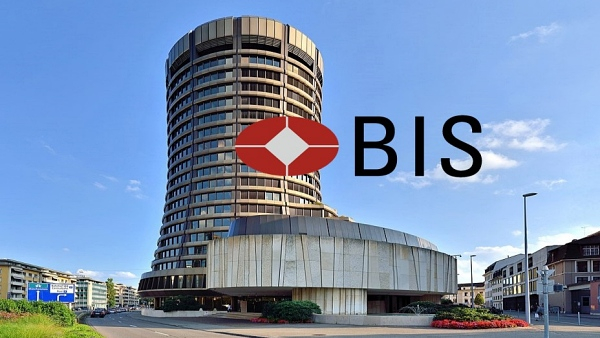
The Bank for International Settlements (BIS), headquartered in Basel, Switzerland, said in a recent report that AI is changing economic demand and supply simultaneously. It said AI is also causing business cycles and structural change. The BIS said this makes it difficult to apply policy assessments that central banks have used so far.
In countries leading AI technology, including the United States, data centre construction and rising semiconductor investment are lifting aggregate demand by driving a short-term investment boom. A rise in stock markets is also boosting household asset values and expanding consumption. Some, however, raise the possibility that current asset prices may be a bubble reflecting excessive AI expectations.
In the medium term, AI could also significantly reshape the labour market. There are concerns it could cause large-scale job losses, but clear evidence supporting this remains limited. If AI sharply raises productivity, however, it could expand the economy's supply capacity and lead to a positive supply shock that lowers inflation.
BIS economists including Iñaki Aldasoro (이냐키 알다소로), who wrote the report, said, "Uncertainty about AI's economic impact poses new challenges to monetary policy and financial stability." They said, "Because the impact differs by industry, it has become more difficult to assess the economic stance." They added, "The greater the uncertainty, the higher the risk that policy judgments go wrong."
 Chi-gyu Hwang (황치규)
delight@d-today.co.kr
Chi-gyu Hwang (황치규)
delight@d-today.co.kr