
With growth and exports in the domestic game industry slowing, a proposal has emerged that policy support should be expanded, including a tax credit for game production costs, to achieve the government's goal of a 400 trillion won K-culture market.
The game industry is seeking a breakthrough by adopting artificial intelligence (AI) and expanding into console and multi-platform markets. But individual companies find it difficult to shoulder risks stemming from rising development costs and shrinking investment, prompting calls to link tax measures, policy finance and support for global expansion.
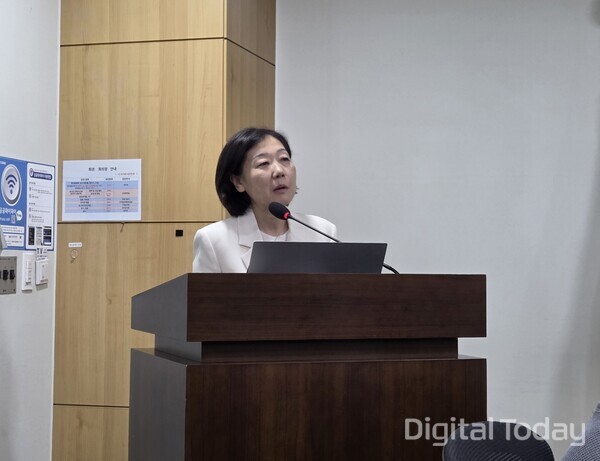
Song Jin (송진), head of the Policy Research Division at the Korea Creative Content Agency, said at a policy forum in Seoul's Yeouido on Monday titled 'The role of the game industry and strengthening its policy status to achieve 400 trillion won in K-culture' that games account for about 15 percent of total sales in the content industry and 60.4 percent of exports. He added that games account for about 6.9 percent of this year's content industry budget.
The government has set a target of expanding the K-culture market to 400 trillion won and exports to $110 billion by 2030. To meet the target, the market must grow 7.86 percent on average each year over the next five years, while exports must increase 8.91 percent.
Song forecast that if the current level of policy budget is maintained, content industry sales in 2030 would remain at about 206 trillion won and exports at $18.7 billion. He analysed that even if the budget is increased by 10 percent each year, sales would reach about 215 trillion won and exports about $19.1 billion, still short of the targets.
He said achieving the K-culture targets would be difficult if the current structure is maintained without additional policy intervention. He also said the government's budget and policies should act as a catalyst to spur private-sector innovation and investment and improve the global market environment.
The game industry has led domestic content exports, but its growth momentum has weakened recently. Domestic game industry sales are estimated at about 24.1 trillion won in 2025, but year-on-year growth was only 1.1 percent. Exports have also been showing a modest recovery after falling 6.5 percent in 2023.
Song cited declining user numbers, a market reshaped around long-running hits, rising development costs and lengthening release cycles, and the limits of a mobile-focused business model as reasons for slower growth. He explained that restrictions on entering the Chinese market, an export structure highly dependent on a small number of top companies, and a lack of diversification by genre and platform are also constraining export expansion.
He added that an important task in overcoming these limits is to maintain mobile competitiveness while strengthening console and multi-platform strategies.
Song said a virtuous cycle of investment and production is a prerequisite for competitively strong content to continue emerging in global markets. He added that, given rising production costs, worsening profitability and stalled fundraising, systems tailored to the characteristics of the content industry are needed, including subsidies, policy financing and tax support.
He projected that introducing a tax credit for game production costs would generate about 145.53 billion won in value-added inducement and about 225.5 billion won in production inducement over five years, and increase employment by about 15,000 people. He estimated the net economic benefit, reflecting reduced tax revenue, at about 2.78 billion won.
Chae Jong-sung (채종성), head of the tax response team at law firm Yulchon, rebutted the Ministry of Finance and Economy's argument that it would be difficult to additionally introduce a production cost tax credit because the game industry already receives a tax credit for research and development (R&D) expenses.
Chae said tax credits are not a system that refunds cash to companies but a method of reducing the tax burden when a company actually makes a profit. He added that the mere existence of a system does not mean a company has received a substantive benefit.
He said actually using the R&D tax credit means a company carried out R&D and generated profits to which the credit could be applied. He explained that tax credits are designed to induce investment and employment, and that receiving many credits does not mean a company has received excessive support.
He stressed that tax credits are a system that increases the profit investors can recover when a business succeeds, encouraging additional investment. He added it is not a request to guarantee outcomes but to provide opportunities for investment and challenge.
Choi Seung-hoon (최승훈), head of policy at the Korea Association of Game Industry, said tax design is needed to encourage companies to maintain employment and investment during the AI transition.
Choi said incentives should be provided by strengthening the integrated employment tax credit so companies can maintain and expand employment even after adopting AI. He added companies should aim to produce more games with the same workforce instead of reducing staff, and challenge high value-added markets such as North America, Europe and Japan.
He also proposed introducing listing incentives to broaden funding channels for game companies. He said 13 game companies have listed on KOSDAQ over the past 12 years, far fewer than 146 biotech companies, another high-risk, high-return industry, and said separate evaluation criteria are needed so new game firms with proven box-office potential and growth can raise follow-on development funds through initial public offerings.
The government plans to expand support for producing indie games and for mid-sized game companies, as well as support for global expansion. Choi Won-seok (최원석), director of the Game Content Industry Division at the Ministry of Culture, Sports and Tourism, said the government will expand support for indie games and create a separate track next year to provide larger-scale production funding to foster companies that form the industry's middle tier.
It also will support fundraising for game companies through a 120 billion won game-sector fund formed jointly with Nexon in June and through a newly introduced loan programme. He added the government plans to strengthen support for expansion into the global south, including South America and Southeast Asia, in addition to North America, Europe and China, and to continue consultations with relevant ministries on introducing a tax credit for game production costs.
Kim Jae-won (김재원), a lawmaker of the Rebuilding Korea Party who hosted the forum, said an industrial ecosystem is needed in which investment and creation form a virtuous cycle by strengthening tax credits for game production costs, protection of intellectual property and support for global marketing. He added he will reflect views raised at the forum in the National Assembly's legislative and budget discussions.
 Lee Ho-jung
lhj@d-today.co.kr
Lee Ho-jung
lhj@d-today.co.kr