
[Digital Today intern reporter Seung-a Yoo] Amazon has moved to build a new satellite network that provides services directly to mobile phones.
On July 27 local time, multiple foreign media outlets including the IT publication TechCrunch reported that Amazon applied to the U.S. Federal Communications Commission (FCC) for permission to operate 5,105 satellites and plans to begin launches from 2028.
The application is a follow-up step after Amazon acquired Globalstar's satellite business unit a few days ago. Globalstar has provided satellite connectivity for Apple's iPhone emergency connection feature and for Internet of Things (IoT) devices. In the filing, Amazon laid out a plan to use Globalstar's radio spectrum to expand existing services and integrate them with its low-Earth-orbit broadband satellite network, Leo.
That would deepen Amazon's rivalry with SpaceX, which has led the satellite internet and satellite-to-mobile connectivity market. SpaceX plans to spend $20 billion, or about 29.33 trillion won, to buy spectrum from EchoStar to build a mobile satellite constellation. It is also an area SpaceX presented as one of its key growth strategies in IPO-related documents.
Still, the business viability of satellite-to-mobile connectivity has not yet been sufficiently proven. Most current services have limited bandwidth and often remain at the level of text messages or emergency response. The chief executive of T-Mobile, which provides satellite connectivity services to subscribers using SpaceX satellites, has also said demand is not strong.
T-Mobile CEO Srini Gopalan (스리니 고팔란) said at an event in May, "As of May, satellite usage is 0.0002 percent of total network usage," adding, "It is a level with three zeros." He added that satellite use mainly takes place in national parks. It shows that more time is needed before satellite connectivity becomes a universal mobile service.
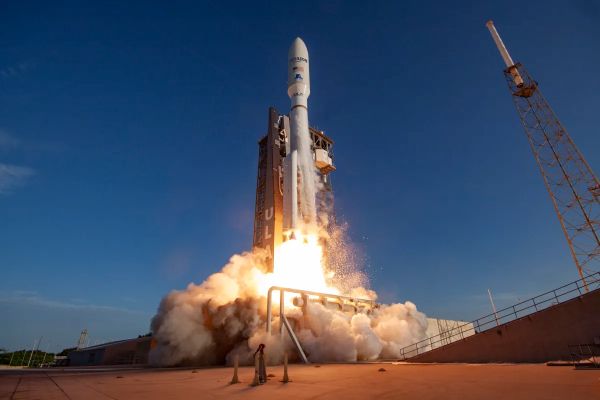
Amazon also faces the task of securing launch capacity, separate from entering the market. Amazon had planned to have Jeff Bezos (제프 베조스)' space company Blue Origin handle satellite launches, but Blue Origin's New Glenn rocket has been delayed. Operations have been suspended since an anomaly destroyed a launch pad in May. As a result, Amazon also asked for an extension of the satellite network buildout deadline specified in its existing FCC authorisation.
Even so, Amazon has room to keep investing on the back of its financial strength. Amazon's liquid assets as of the end of April were $255 billion on the books, or about 374 trillion won. By contrast, SpaceX was presented as facing more urgent capital needs during its network expansion.
Against this backdrop, Amazon's latest application is seen as more than a simple plan to add satellites. It is read as an attempt to expand Globalstar assets that were focused on iPhone emergency connectivity and IoT into services for general mobile phones. Future focal points are whether the 2028 launch schedule can be carried out in practice and how much Amazon can grow limited demand for satellite-to-mobile services.
 Seung-a Yoo
ysah@d-today.co.kr
Seung-a Yoo
ysah@d-today.co.kr