
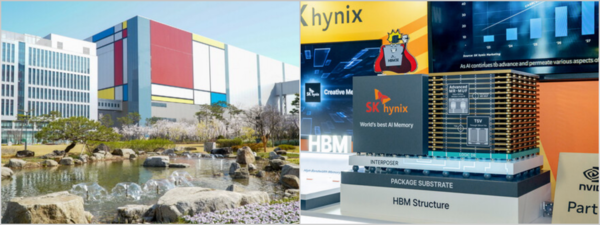
The global memory market is focusing on SK hynix's final second-quarter results on July 29 and Samsung Electronics' on July 30. The size of both companies' results is expected to be a record high. Samsung earlier announced preliminary operating profit of 89.4 trillion won, while SK hynix is estimated to post operating profit of 67.6 trillion won.
Overseas investment banks and market research firms are therefore paying closer attention to the companies' post-earnings conference calls. Depending on their explanations of second-half pricing and contract structures, judgments that have diverged over whether the memory cycle has passed its peak could tilt in one direction. What the market wants to confirm in this conference call is not the scale of results, but the basis for profitability continuing into the second half.
Samsung's preliminary consolidated second-quarter revenue was 171 trillion won, up 129.31 percent from a year earlier. Compared with the previous quarter, revenue rose 27.74 percent and operating profit increased 56.21 percent. For the first half, it posted cumulative revenue of 304.87 trillion won and operating profit of 146.63 trillion won. Based on preliminary results, the companywide operating margin is 52 percent. As that figure is on a companywide basis including mobile and displays along with semiconductors, the margin level in the memory business is estimated to be higher.
SK hynix's second-quarter revenue is forecast at 87.1 trillion won and operating profit at 67.6 trillion won. That would be increases of 292 percent and 638 percent from a year earlier, respectively, with an operating margin topping 77 percent. The brokerage industry said it slightly raised its estimates to reflect the June rise in the exchange rate.
A key point is the composition of profit. If the single product that lifted results through the first quarter was high bandwidth memory (HBM), then in the second quarter mainstream DRAM and NAND flash rose together. As capacity focused on HBM production, supply of mainstream products fell, and that gap led to higher prices.
In SK hynix's case, given its large share of HBM revenue, analysis suggests the benefit from a rise in general DRAM prices is smaller than at rivals. Instead, a product mix centered on high-spec DRAM and enterprise solid state drives (eSSD) supports profitability. As data center storage demand moves on a separate axis from HBM, the contribution of the NAND business becomes an indicator for gauging the breadth of this boom.
Interpretations differ for the same phase. Some overseas investment banks, including Morgan Stanley, and TrendForce pointed to a slowdown in the pace of mainstream DRAM contract price increases from the previous quarter and presented the view that price momentum is nearing a peak. Their argument is that a phase of rising prices differs from a phase in which the pace of increases accelerates.
The basis cited by the opposing camp is long-term supply agreements (LTA). Goldman Sachs and Citi, among others, analyzed that as the share of contracts with big tech customers on 3 to 5-year terms has increased, unit price volatility has fallen compared with past memory cycles. They say the structure means results do not move by the same magnitude even if spot prices fluctuate.
This announcement provides the point to test that argument. The center of gravity in the peak-out debate could shift depending on how much the companies disclose about third-quarter DRAM and NAND average selling price (ASP) guidance and the level of LTA reflection. If contract structures are confirmed in figures, the slowdown in price gains itself carries less weight as an earnings variable.
HBM4 shift puts 77 percent margin sustainability to the test
HBM4 is a key area to watch. From the second half, HBM will shift to a structure in which foundry logic processes are used on the base die. If the driver that allowed SK hynix to maintain an operating margin above 70 percent was its supply position in HBM3E, then in HBM4, foundry collaboration costs will be newly reflected in costs. TrendForce pointed to this shift as a point to watch in the second half.
For margins to hold, prices must absorb higher costs. As HBM4 has a custom character that reflects customer specifications, assessments say pricing power has increased compared with before, but whether that is actually reflected cannot be confirmed until second-half supply volumes are finalized. Whether next-generation packaging yields can be secured is on the same line.
Items to confirm for Samsung are different. The timing of passing HBM4 qualification tests, the schedule for entering mass production with major customers, and whether yields stabilize in 1b and 1c nanometer processes are tied together. The scale of profit-and-loss improvement in the non-memory business, including foundry and System LSI, is also an item that could be confirmed in the July 30 conference call. Whether the structure of holding both memory and foundry operations works as a cost advantage in the HBM4 phase is also at issue here.
The final issue is capital spending. An argument is emerging that the variable determining how long a shortage phase lasts is not demand but the pace at which suppliers expand capacity. Market research firms including Omdia forecast the shortage will continue until 2027, but that outlook is based on the premise that the two companies restrain capacity by adjusting the conversion ratio of mainstream DRAM lines to HBM. That is why the pace of second-half facility investment spending and new fab start-up schedules are read ahead of earnings figures. Verification is also under way on whether big tech's artificial intelligence (AI) data center investment will maintain its current pace.
Profit up 1,810 percent from a year earlier also shows that the base in the comparison period was low. With the scale of results already disclosed, the point the market will react to is likely not the operating profit figure but the specificity of second-half guidance.
 Daegeon Seok
d2dg@d-today.co.kr
Daegeon Seok
d2dg@d-today.co.kr